Day 2 – Camba Bavaria – Bavarian Winter IPA

day-2-camba-bavaria-bavarian-winter

The craft beer advent calendar is a tradition for me now. It is my third year writing about each of the beers contained within and it’s also a reminder of how far I’ve managed to come with my beer education and this blog. I am a long stretch from where I was when I first began.

It was really fun trying yesterday’s beer from Italy. I found myself reminiscing of searching for craft breweries while I was there. Today I opened the second tab to see what might be in store. From one of my favorite places to visit, Bavaria (Germany) was their Bavarian Winter IPA from Camba Bavaria Brewery.

Camba Bavaria has only been brewing since 2008 and already they have produced over 50 beers ranging from Pale ales, to Helles, to Russian Imperial Stouts aged in cognac barrels. Making use of a large variety of raw materials, they are always working to be innovative. This young brewery has been working to introduce new beers practically every week.

Located in an old mill in Truchtlaching on the river Alz, Camba was originally built as a brewery pilot plant by the brewing plant manufacturer BrauKon GmbH, regarded worldwide as one of the top suppliers of brewery equipment for small- and medium-sized breweries. This means that when Camba started they were already beginning with the ideal conditions for brewing beer giving them a head start in their journey. Currently Camba employs 3 master brewers, 5 brewers, and 5 beer sommeliers and work hard to communicate and exchange with other brewers around the world.

The name Camba Bavaria is actually pretty interesting as well. Truchtlaching was originally a celtic settlement in Bavaria. The word “Camba” means “brew kettle” in old Celtic language and thus pays tribute to that heritage. The second part, obviously, comes from the region in which they are located. The village of Truchtlaching is located in Chiemgau, one of the most beautiful holiday destinations in Bavaria.

IPAs or India Pale Ale, have a storied history. The first known use of the term comes from the Sydney Gazette and New South Wales Advertiser in 1829.  At this time, they were also referred to as a “pale ale as prepared for India”, “East India pale ale”, and “Export India Pale Ale”.  These types of IPAs were widely popular amongst the East India company and, while considered very hoppy, they were not much stronger than other beers brewed at this time. If you’re curious about IPAs check out Wikipedia, the BJCP Guidelines (Page 37) or IPA Beer.

While these beers are part of the pale ale family, they are strongly hopped and often showcase the variety of flavours and complexities that can come from the simple ingredients used to brew beer.  Many will say the IPAs are an acquired taste, and they are rather unique, the bitterness brought by the use of a large quantity of hops is not for everyone. Whether there is anything special about this in being a “Bavarian Winter” IPA is unknown, but I’m certainly excited to see. Now, onto this specific beer.

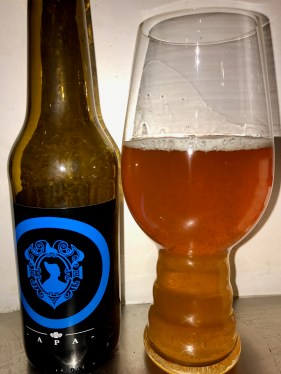
Appearance – Pale golden, almost amber with a good 3” of head that retains well and leaves lacing as it fades.
Smell –  Resinous hop notes that come through strong. Grapefruit citrus and a sweet tropical fruit note that is likely the lychee (I’ve never had one but my wife says that’s what it smells like.)
Taste –  Good bitterness on the front, not overpowering, with a sweet candy like taste and some grapefruit tartness. Finishes with a subtle lingering bitterness and citrus notes.
Mouth feel
– Medium body with an upfront resinous bitterness, candy sweetness in the middle and a subtle lingering bitterness on finish.
Overall – A well hopped, but not overpowering, IPA that offers a good combinations of resinous hop notes combined with subtle citrus and candy sweetness.
Do I like it?
– I found it to be fine. With the plethora of IPAs out there and the number that I’ve had, I find myself craving different beers than IPAs these days. I wasn’t a huge fan of the candied sweetness, but other than that I found it to be enjoyable.


Day 1 – Birrifico Del Doge – APA

day-1-birrifico-del-doge-apa

As with every year, opening up that first advent calendar tab is incredibly exciting.  It brings me back to when I was a kid and my mom would buy us an advent calendar with little chocolates inside. Every day was a different chocolate and every day was a little bit of excitement.  Translate that to an adult version with beer instead of chocolate, I’m a happy camper. Nostalgic.

So, like I did last year, with sincere anticipation I opened the first tab and lo and behold, it was Birrifico Del Doge’s APA. I had the opportunity to visit some craft breweries in Italy. While not typically known for beer, being the largest producer in the world of wine, what I tasted was quite good. So I’m interested to see what this one is like.

Birrifico Del Doge (Doge’s Brewery) is located in Zero Branco (Treviso) Italy and is self-described as an “Italian crafted German beer”.  Zero Branco is located on the expanse of the Paduan plain between the cities of Venice and Treviso. The local landscape is characterized by its beauty and network of waterways including the river for which the town is named, River Zero.

Doge’s Brewery takes great pride in their brewing and selects only the highest quality ingredients to use in its beer. Brewing was originally a hobby for the brothers who founded Doge’s Brewery, but once they got a taste for brewing they knew they needed to take it further. In 2012 the Guiman brothers partnered with brewer Federico Casarin to create Doge’s Brewery. ‘Doge’ brewery’s main values include attention to quality, meticulous selection of raw materials, use of source water, deep passion and a desire to impress.

Birrificio del Doge produces eight types of craft beers as well as the occasional specialty brew.  They take pride in attention to detail and quality and say on their website that “We do not bottle-condition our beer, but decant the yeast, which affords Doge’s Brewery beer its hallmark clarity.”

American Pale Ales (APA) are, obviously, pale, refreshing and well hopped but with the right amount of malt backbone to balance the beer. The opportunity to select from hops can give this beer a range and either reflect classic hops or new world hops. Generally, an APA is more accessible than an IPA while still providing a hop forward flavour.

The APA is a modern American craft beer adaptation of the English pale ale. These beers tend to reflect ingredients that can be sourced by the brewery locally. While these beers are an American craft beer invention, the desire to source locally means that this Italian version will hopefully have a little bit of that old world flare.

Prior to the explosion of popularity of the IPA, the American Pale Ale was the most well-known and popular of the American craft beer styles. Without further ado, time to taste the beer.

Appearance – Pours golden blonde with a thin ½” white head that retains well.
Smell –  Citrus notes reminiscent of lemon and grapefruit with a soft floral hop aroma.
Taste –  Mild hop bitterness that is compliment by a very subtle malty sweetness with notes of lemon, grapefruit.
Mouth feel
– Light mouth feel with soft bitterness on the start and mild carbonation. Finishes with a light lingering bitterness.
Overall – Subtle hop complimented with malt sweetness that balances well and presents an approachable mildly hoppy beer.
Do I like it?
– I did like it. This beer was light, floral, and had some good hop notes to it. These days I find myself leaning towards bolder beers and so, while this one was good, and I did like it, it’s not one I’d be clamoring to grab.


Craft Beer Advent Calendar 2016

My wife gifted me the Beer Advent calendar again this year.  24 different “New World” beers from “Old World Countries”.  As I did last year, I plan to blog about these beers again.  Every day.  That means 24 posts, hopefully.  The goal of these posts is education. Mine and, hopefully, yours. It’s about learning more about beer and the breweries who make them. Here is how the post will be organized:

  • Beer name, location, and style of beer.
  • Description of the style, origins and information about the brewery.
  • Rating of the beer based on the following:
    • The appearance of the beer
      • What’s the colour, the head and the retention of the foam?
    • The smell of the beer
      • What notes are present and are there any off notes that shouldn’t be there?
    • The big one
      • How do the smells come through in the taste, is it pleasant, are there any off-flavours or things that just aren’t quite right?
    • Mouth Feel
      • What’s the body of the beer, is it light, or heavy? Is there a good carbonation level for the style?
    • Overall thoughts on the beer in relation to the style
    • Whether I actually like the beer or not and why

I want to make a note on the reviewing system I use.  I’m not a beer judge. Those who have been trained to be able to smell and taste what is off in a beer are very good and I respect their opinions.  With that exception, I don’t always take stock in how people rate beers.  Perhaps someone doesn’t like a particular style, or they don’t think the beer is good.  It doesn’t mean I, or someone else, won’t like it.

So, while I will be reviewing these beers, it is more for my own personal education and to keep track of which ones I liked the best throughout the process.  You can take my reviews as you like, either listen or don’t.  Ultimately, I want people to try new beers and take chances.

The first post will be coming later today.  In the meantime, here is my round up of last year’s Craft Beer Advent Calendar.

Little Brown Jug – Follow-Up

I stopped in to visit with Little Brown Jug this past week and catch up on their progress. I have to say that the space is looking both fantastic as well as pretty much complete. They have been working hard on getting their beer ready and they are ready to go. It’s an exciting time for beer in the city of Winnipeg.

Last week was spent really dialing in on the brew house system. It’s actually a pretty incredible setup that focuses on efficiency (both in brewing and environmentally) and recovers much of the heat from the brewing process. The kettle actually uses steam through an external calandria which allows for an incredibly quick rolling boil and a much more efficient process. They have also installed an auger from their grain room directly into the mash tun. In fact, they are able to grind into a sealed auger so that they can prepare the day before and be ready to brew. Overall the brew system is really cool and I encourage anyone interested in these things to go check it out.

All of this hard work has resulted in them being ready to send out kegs this week.  Kevin indicated that they would be sending out kegs to beer spots in the city – Quality Craft Beer Store, King’s Head, Good Will, Barley Brothers – Polo; Carbone – 260 St. Mary; and Pineridge Hollow. All of these places will have beer on tap this week with Pineridge Hollow coming next week.

They are open as of today: Wed-Fri 3-9PM and Saturday noon – 8 PM, with these limited hours to allow for people to come in and pick up the beers. As well as the opportunity to try the beer in their tap room, they are doing growler and howler fills as well as offering pre-filled 750ml little brown jugs.

The really cool thing they are doing with these little brown jugs is offering an exchange program on them. Essentially you don’t own the jug. You put a deposit down and when you come back you can either exchange it for another pre-filled one or get your deposit back, your choice. I think this is an excellent idea and it’s actually how I feel the growler system in the city should be working.

Little Brown Jug is really trying to be efficient with peoples’ time and recognize that people may not always have the opportunity to wait around for a growler to be filled. By offering these jugs, pre-filled, people can pop in, grab some beer, and head on their way. While they do have a small tap-room space at LBJ, they are first and foremost a production brewery.

Little Brown Jug is launching with one beer, a Belgian Pale Ale that is brewed with brewers’ gold (a derivative of a local hop). I for one am excited to get a chance to try another new beer to the market and I really look forward to seeing what they may come up with next down the road.

So, follow Little Brown Jug on twitter (@LBJBrewing) and while you’re at it, follow me too (@beerwinnipeg).

Tomorrow is the first day of the craft beer advent Calendar. I’ll be posting in the morning to give you an idea of what to expect but I won’t be posting about the beers until later in the afternoon/evening. Last year I inadvertently spoiled the surprise for others and I want to do my best to avoid this. So, get ready for a 24 daily posts about “New World Beers from Old World Breweries”.

-Beer Winnipeg


Best of Beaus Mix Pack

Sometimes I feel pretty lucky doing what I do. I had the opportunity to try out the Best of Beau’s pack a little bit early so that I could spend some time tasting and writing about the pack. This pack is already listed on the MB Liquormarts website and I’m hoping that this write-up of the four beers contained within will prove helpful to you. Overall the pack presents some diversity of styles with some interesting twists.

I did a pretty in-depth write up about Beau’s when I met with co-founder Steve Beauchesne, but I do want to reiterate a bit about the brewery. Founded in 2006 in Vanleek Hill, Ontario by father and son Tim and Steve Beauchesne, Beau’s is an employee-owned and completely independent Canadian craft brewery. Led by head brewer Matt O’Hara, the focus at Beau’s is to brew interesting and tasty beers using only quality, certified-organic ingredients and local spring water. While not the only completely organic brewery in Canada, they certainly have made a name for themselves with their business practices: they’ve won over 85 awards for their brewing, packaging design and business practices. This includes two gold medals at Mondial de la Biere (Strasbourg, France, and Montreal Quebec); six gold medals at the Canadian brewing awards, seven times “Best Craft Brewery in Ontario” and seven times “Best Regularly Produced Beer in Ontario” at the Golden Tap Awards.

This “Best of Beau’s” pack contains four beers. Dark Helmut – Imperious Schwarzbier, Bush-Fire – Rooibos Honeybush Beer, Collabrrrewnaut – Espresso Pilsner, and Quads & Rockers – Belgian Quad.

Dark Helmut – Imperious Schwarzbier

Dark Helmut is a beer brewed in the style of a Schwarzbier, a German dark lager that literally translates to “Dark Beer”. The “imperious” nature of it both plays on the Dark Helmut (reminiscent of both Darth Vader and Lord Helmet) as well as the fact that the ABV on this beer comes in at 7.3%.

Schwarzbiers are typically a balanced beer. Presenting both a smooth roasted malt characteristic along with a moderate hoppy bitterness. Lighter in body and lacking the deeper roasted malt and heavy aftertaste make Schwarzbiers easy to drink.

While the history on this style is fairly sketchy, it is a regional specialty of Thuringia, Saxony and Franconia in Germany. Popularity for this beer came back after German unification and it served as an inspiration for Japanese brewed black lagers.

ABV – 7.3%
Appearance – Pours charcoal with a thin quick fading off-white head.
Smell – Smells of caramel and toffee, dark fruit and roasted malt
Taste – Bitter roasted malt notes along with sweet malt and caramel. Lingering bitter slightly astringent after taste.
Mouth Feel – Soft carbonation with a dry bitter finish.
Overall Thoughts – A very nice well-balanced beer that has a bit more flavour from the extra malt used to make this imperious(imperial).
Do I like it? – I found this beer to be quite tasty. It wasn’t too rich or filling but still carried a nice malt and hop balance. Easy to drink and flavourful.

Bush-Fire – Rooibos Honeybush Beer

Bush-fire is brewed using a blonde ale as a base with the addition of rooibos and honeybush teas. Blonde ales are traditional malt oriented with interesting hop or floral flavours and aromas. Light bodied, easy to drink and refreshing, these beers typically don’t overwhelm the senses with flavour. They are typically well-balanced and clean on the finish.

Typically, this style of beer is brewed as an alternative to a lager, which requires a period of lagering making it a more time consuming beer to produce. This particular blonde ale from Beau’s certainly contains a punch of both aroma and flavour that is clean on the finish and very satisfying to drink.

ABV – 5.8%
Appearance –  Pours amber with a short lived thin white head.
Smell – Smells of Honey right upfront with hints of southern sweet tea, and rooibos
Taste – Nice sweetness reminiscent of honey with a dry tannic bitterness on finish from the tea. Not overpowering by any stretch but flavourful and enjoyable. Rooibos and honey bush bring really nice flavours to this blonde ale
Mouth Feel –  Medium carbonation, light mouthfeel with a lingering dry finish.
Overall Thoughts – Overall quite a good beer. Teas bring a very good balance and depth to the blonde ale base. Honey sweetness and dry finish make for an enjoyable drink.
Do I like it? – While I tend to find blonde ales not to be up my alley, this one had nice flavours to it that added quite a bit to the easy drinking blonde ale base. So, yes, I did like it.

Collabrrrewnaut – Espresso Pilsner

Collabrrrewnaut is a really interesting blend of a Bohemian-style pilsner base and cold brewed organic fair trade coffee.  Done as a collaboration between Beau’s and Ottawa’s Bridgehead Roastery, this beer brings some really interesting flavours to an already delicious style of beer.

Pilsners are one of the most popular beer styles in the word and originate in the City of Pilzen in 1295.  While Pilsners are considered to be bottom-fermented beers now, they were actually top-fermented until about the mid-1840s.  The taste and standards of this older styles varied widely and in many cases entire barrels of beer were dumped out.  In 1839 the city of Pilsen founded a city owned brewery (now Pilsner Urquell) which was to brew beers and pioneer the Bavarian style.  Brewers had already begun to brew using bottom-fermenting yeasts that were fermented and stored in colder temperatures to be drunk later. This is where the term lager comes from. Lagern is the German word for storing and comes from this process.

Using Pilzen’s soft water, local saaz hops and this Bavarian style of lagering produced a clear, crisp and refreshing beer that became the standard for the style.  With the introduction of modern refrigeration there was no need to use caves for beer storage and this enabled the brewing of bottom-fermenting beers in many new places.

ABV – 5%
Appearance –  Pours a straw colour with an effervescent white head.
Smell – Smells of slight herb and spice and a subtle espresso note.
Taste – Deceptive. While it has a very subtle bitterness and a clean dry finish it contains interesting depth of notes from coffee to subtle fig and hints of chocolate.
Mouth Feel –  Medium body, medium carbonation with a lingering dry finish.
Overall Thoughts – While I tend to characterize pilsners as having a bit of a “bite” to them on the finish, this beer finishes clean. The really interesting flavours brought in by the use of coffee provide a variety of flavours that don’t typically crop up in pilsners.
Do I like it? – This beer was deceptively good. The initial pour is light in colour and gets the mind ready for a lighter crisp clean beer. While this beer certainly had a clean dry finish, the flavour profile was really interesting. I rather enjoyed drinking this beer and trying to pick out the different components. The coffee used definitely added.

Quads and Rockers – Belgian Quad

Quads and Rockers is a Belgian strong ale that has been brewed with a focus on tradition and style. Full-bodied and full-flavour, these beers are often quite heavy, bring rich malty sweetness.

The name Quadruple comes from the brewing process of this beer.  Essentially it means you are adding four times the malt as you would in a Belgian “simple”.   This increases the sugar content in the beer and results in a highly alcoholic beer.  The best Belgian quads hide this strong alcoholic flavor making them delicious but dangerous. Quads are highly adored due to their deep color, soft maltiness and unique yeast flavors.  Even with their high ABV (usually 8-12%) they are highly approachable when done right.

ABV – 10.5%
Appearance –  Pours Dark brown with a thin beige head.
Smell – Smells of banana, mocha and raisins.
Taste – Rich malty sweetness that has notes of cocoa, banana, and some peppery notes.
Mouth Feel –  Nice medium carbonation with a full mouthfeel and a lingering warmth on finish.
Overall Thoughts – Overall a nice Belgian quad carrying good esters from the yeast and a full sweetness that lingers warm. Alcohol is well masked.
Do I like it? – I’m a big fan of big bold beers. This was a full and enjoyable Belgian Quad that brought some really tasty flavours and a nice warmth from the alcohol. ABV is Well masked, but certainly still a sipping beer, I definitely enjoyed this one as well.

Overall I was quite impressed with the beers in the “Best of Beau’s” mix pack. I can see why they chose each of these beers. They provide a wide range of styles with some great flavours.

I hope that this write-up was informative. I encourage you to get out and try as many new beers as you can. Broaden your horizons and your palate.

*Writer’s Note: I did receive this pack to review free of charge. This did not influence my write-up. *

-Beer Winnipeg

 

Get to know a brewer – Jeremy Grisim

Image result for jeremy grisim

It’s a great time of year around my place. We are getting ready for the holiday season to begin, our daughter is starting to grow, and it is almost time for me to crack into the craft beer advent calendar. I’m hoping folks will enjoy reading about each one of the beers and breweries as much as I enjoying learning about them.

Today I am starting a series that I hope to continue for as long as I am able. “Get to know a brewer” is something I thought of when I was last chatting with Jeremy Grisim from Half Pints. When I first met Jeremy, he was doing me a favour and picking me up a test batch from Half Pints. Over time, I started seeing him at Half Pints more often and later learned he had joined the Half Pints team. Now, he’s accomplished a goal he set for himself of becoming a brewer. So, who better to start this with than him.

Jeremy became interested in brewing while he was working on a chemistry degree. He had taken some biology and chemistry courses that talked about fermentation sciences and as he had tried various craft beer and was being exposed to new styles of beer, Jeremy decided to try home brewing. He started small, buying a kit from Grape and Grain, and from that point he was hooked. While he had initially thought of being a chemistry teacher, he felt a calling to one day open a brewery and decided that he would follow that dream and work towards it.

Having a good background in science, Jeremy felt as though he needed to get some more knowledge surrounding the brewing process and the science/art of brewing beer. He took the executive overview of brewing from the Siebel institute and began communicating with as many brewers as he could across Canada seeking their advice and direction on further education. From this advice, Jeremy decided to do the 1-year associate degree in brewing technology from the Siebel institute. While this provides some great learning, it lacks in practical experience. Really wanting to get this practical knowledge, Jeremy and his wife had been ready to move their family wherever they needed to go. Luckily, he was hired on at Half Pints as a brewery assistant in May 2015 and began chasing his dream.

While working as a brewer assistant at Half-Pints, Jeremy also took on the task of conducting brewery tours. Half Pints already had a full slate of brewers and while Jeremy was happy to help and felt he was learning, he ultimately wanted to be brewing beer. This past summer, 2016, two of the brewers from Half Pints left to pursue other goals which left Half Pints with space for a new brewer. Dave Rudge, President of Half Pints, sat down and asked Jeremy about his goals. Jeremy said he wanted “To one-day be the best brewer in Winnipeg and to brew beer until I can’t brew anymore.” Dave offered him the chance to get trained on the brewing equipment and Jeremy has brewed full-time ever since.

Jeremy loves all styles of beer but has a ton of respect for the old-world breweries. He has a Czech background himself and deeply respects the skill required to brew and the history behind old world beers. He takes great joy in drinking beers from North American breweries as well of course. Jeremy said that he feels breweries are moving away from the tendency to brew to style and are no starting to brew to inspiration. Instead of trying to replicate a style of beer they are trying to create a beer. While Jeremy didn’t really give me an answer on his favorite style, the first beer he has developed and brewed at Half Pints is a California Common. We can expect to see this on the test batch system before too long and Jeremy hopes the beer will be scaled up into a bigger batch.

In the next 5 years, Jeremy sees himself strengthening his brewing skills, increasing his knowledge, and immersing himself in the burgeoning Winnipeg brew scene. For now, he’s brewing 40-50 hours a week and using this as an opportunity to begin dialing in and improving his skills. Jeremy is completely immersing himself in beer.

I also took this opportunity to catch up on what’s new at Half Pints. The tap-room is up and running and looking darn fantastic. This has given Half Pints’ the opportunity to expand the use of their test batch system as they can put it on tap in the tap-room. This is something they are looking to do as often as possible, both to scale up and just for the fun of it. Some of the things in the taproom and will not be available anywhere else.

What Jeremy was able to share is that we will be seeing a test batch of Ol’ Glory (American Barley Wine) and a Count Chocula Stout coming soon. As well there is a Winter Spiced Red Ale that will be on the growler bars around the city as well as 1000 litres of Humulus Ludicrous (Double IPA) that’ll be on draft and growler only.

hp-taproom-5

Throughout the year, we can expect to see a bunch of brand new beers and old favourites making their return. Given the tasting room, it’s given Half Pint’s the ability to have a beer with their customers and talk to them in a way they haven’t had the chance before. Aside from the test batches, Half Pints is also hoping to play around more with casks and pins to put twists on their beers for the tap-room. With the taproom, fully operation, I think it’s a good time to get into Half Pints and taking advantage of the tap-room.

I’ve got a follow-up with Little Brown Jug still coming this week and it is almost time for my Marathon month of posting on the Craft Beer Advent Calendar. Check out last years’ wrap up. This year, it’s Old World Breweries, New World Beers. Exciting.

Deschutes – Pinot Suave

pinot-suave-22oz

It’s been a little bit since I’ve written a post and it’s nice to be back at it. I have had some exciting changes in my life recently which have prevented me from posting as often as I would like. My wife and I welcomed our daughter to the world on November 4th and it’s been a whirlwind. It is probably the best and most significant change I’ve ever had in my life and I’m really happy, if not a little sleep deprived.

While I am scheduling follow-ups with many of the local breweries in the city, I wanted to take today’s post to give a write-up on a unique beer that has arrived on Liquormart shelves. Pinot Suave from Deschutes is a pricey bottle of beer ($29.99) and many might be wondering whether it’s worth it or not. I’m not here to tell you one way or the other, but I wanted to give it a try and figured I’d give you some background on the beer, style, and my notes.

Deschutes is a family and employee-owned brewery located in Bend, Oregon. Starting as a public house in 1988, Deschutes believes that every pint of beer should be worth sharing. Deschutes is all about finding the balance between community, experimentation, and ingenuity and drinkability, quality and consistency. With a variety of all-year, seasonal and specialty brews, Deschutes makes some typical and atypical beers for folks to enjoy. We’ve been fortunate to have some of these come to Manitoba and I know I’ve enjoyed many of them.

Along with this passion for beer, they live by a motto of sustainability as well. Since 1988 they’ve followed the practice of “do your best and next time do it better” in all things. They employ a sustainability team to work at ensuring they use less resources while maintaining productivity and quality in product. You can read more about their commitment to sustainability here.

On-top of their commitment to sustainability they have a strong tie with the community of Bend. Since 1988 they’ve endeavored to be a part of the community and are always looking for ways to help other community organizations be successful. They contribute one dollar of every barrel they sell to charitable organizations throughout the territories they sell their beer. In total, they contributed $850,000 in cash and in-kind donations.

The specific beer that I tried was their Belgian Dark Strong Ale called Pinot Suave. It gets its name from being aged for 18 months in French and American oak barrels that had previously contained Pinot Noir. They’ve also made an addition of pinot grape must and sour wort to the beer giving it a really unique flavor profile that contains both an acidity and wine like characteristic.

Belgian Dark Strong Ales are, oddly enough, very strong Belgian ales with an ABV of between 8 and 12%. Overall these beers typically have a blend of malt, dark fruit and spice characteristics and are often described as smooth, complex and dangerous because of their ability to hide the ABV amongst the flavours. Historically these beers are unique in character depending on the brewer and often produced in limited batches which end up being highly sought after. As always you can read more about the style in the BJCP guidelines (Page 53-54).

The beer comes in a 750ml bottle that has been waxed on top and given the alcohol content, this is one that you would be able to age should you so choose.

ABV – 11.9%

Appearance – Dark amber/brown with a medium light tan head.

Smell – Very interesting aroma. Wine grapes, caramel, oak notes, some toffee and a boozy aroma as well.

Taste – Taste begins clean and crisp with notes of oak, rich sweetness, grape must and some light tartness. The grape notes are quite noticeable and the finish is very tannic giving this beer a wine-like characteristic. It’s almost like a combination of wine and beer.

Mouth Feel – Soft carbonation with a dry tannic finish reminiscent of a red-wine. Boozy warmth is ever-present.

Overall Thoughts – Very unique combination of flavours. Comes across as more of a wine-beer hybrid. The Belgian strong-ale base is definitely there and brings a really deep malty-sweetness that works well with the tannic and tart notes from the wine aspect of this beer. Overall a very interesting Belgian style of beer.

Do I like it? – I enjoyed drinking this beer. I found that the combination of flavours was something I hadn’t really had before and it was enjoyable. I wasn’t overwhelmed by the beer and , while I would certainly be interested in having another one, the price-point on this makes it a little less approachable. I did buy another one to age and will be trying that down the road.

As always, I encourage people to try new beers whenever they have the chance and make up their own minds. Hopefully my notes help.

Thanks so much for continuing to read this blog. I’ve got a follow-up with Little Brown Jug and Nonsuch in the works and hope to be following up with others in the near future. I also got my hands on the craft beer advent calendar again this year and I’ll be posting about each of the beers every day in December. If you haven’t already, follow me on twitter @beerwinnipeg

-Beer Winnipeg


Torque – Two Months In

torque-logo

Open for just over two months, Torque has entered the craft beer market in Winnipeg with a tour de force. That they have such a large brewing capacity combined with the fact they are the first of the new breweries to can has meant they are quickly building a name for themselves as makers of a high-quality and delicious craft beer.

The taproom at Torque is under construction. John Heim indicated they hope open in the next few weeks. After the construction phase the team must install their PoS system, and determine noise levels and seating arrangements.  They are going to move their test batch fermenters into the growler fill area (I wonder why) and will fill directly from the line (after purging with CO2). Look for an announcement on Twitter as John indicated they’d likely be doing a special taproom opening event.

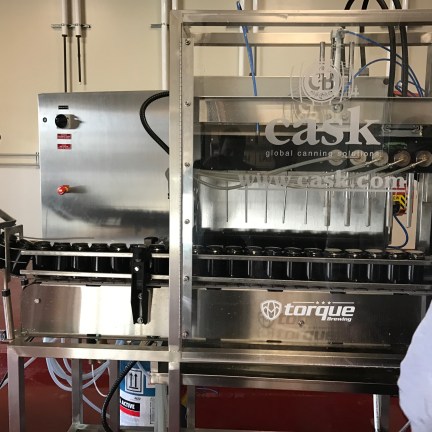
When I stopped by Torque to see how things were going, they were just getting their canning line setup to do 12oz cans for their variety packs. They hope to have this coming out in the near future. We can pin the blame for the delay on one of their beers: since their Helles is a lagered beer it takes eight weeks from brew to can. This means it takes up a lot of tank space and, as one of their most popular beers, they are finding it difficult to keep up with demand.

torque-canning-line


That said, after their first three weeks of brewing, Torque had already found themselves in need of new tanks. They’ve ordered three new fermenters and two new bright tanks to give more capacity for the brews. The need for expanded capacity is urgent as Torque has signed on to contract brew for Lake of the Woods Brewing. Torque will start by brewing the Firehouse Ale but expect to probably do more in the future. The contract is for 100 brews a year, mostly suppling Manitoba.

The popularity of Torque’s beer can’t be overstated: they’ve gone only five of the past 57 days without an order from someone. They’ve recently been put on tap at the King’s Head, Original Joes while The Keg will soon be carrying their beer in cans. Recognizing this, they are working hard to reward supporters who believed in them from the start while still growing to meet demand.

Even though Torque is working hard to keep up with demand for its four flagship beers, they aren’t going to allow themselves to get stagnant. They have a “Finish Line IPA” coming to growler bars in November. This is their Red Line IPA but done with local flower hops from Prairie Gem Hop Farm. They also have a Dunkelweizen that is planned for the growler bars in December and are looking to release a “Winter Pudding” winter warmer in January.

On top of all this brewing, Torque is looking to get their barrel program underway. Working with Ken Yost, they are looking to start doing barrel-aged sours as well as barrel-aged beers such as Russian imperial stouts and Belgian Strong beers. They also want to work with the new local distillery, Capital K, to get some whiskey barrel-aged beers on the go.

If you are interested in connecting with the folks from Torque, they are very active in the community and participating in a number of events. Coming up on November 16 they will be at Garbonzo’s (U of W) for their annual Beer Festival which runs from 7 to 10 pm. On November 17, they’ve partnered with Inferno’s on Academy to offer a Beer Dinner: a five-course meal of dishes made with Torque’s beer along with a pairing of beer. Tickets for this are $80 and as of writing they had 20 remaining. You can contact Inferno’s to book.

With all the success Torque has seen so far, they’ve added a second brewer. Torque is very happy to welcome Perry Joyal to the team. He is working closely with Head Brewer Matt Wolfe as they continue to expand their operations.

Overall, things are moving forward at a lightning pace for the folks at Torque. I hope they are able to keep up with their demand as I have been enjoying all of the beers I’ve tried thus far. I’m anxiously awaiting the opening of the tap room and looking forward to trying some of the new brews on the way.

You can find Torque’s beer all over the city, but especially at Liquor Marts and beer vendors like Quality Craft Beer Store on Pembina.

-Beer Winnipeg

One Great City – Follow-up

OGC Logo

It had been a while since I spoke with the guys from One Great City. Given they’ve been working so hard on getting their space prepped, I dropped in to visit for a bit of news and a beer.

Originally, One Great City had hoped to be open by October 2016. Due to some delays, including the installation of a new electrical panel, this was not possible. Thankfully, all the building permits have now come through and Tim and Jon are hard at work getting things ready as quickly as possible.

While covering the rise of craft breweries in Manitoba, I’ve learned to not ask for an opening date; they’re very hard to accurately predict. That said, the One Great City team hopes to have their doors open in the first quarter of 2017. All the equipment has been ordered, the beer development is moving along swimmingly and the food menu has been finalized.

The OGC team has been busy since Flatlanders perfecting the recipes they spotlighted there: Tipsy Cow milk stout and Monkey Trail pale ale. They’ve also been developing other styles of beer, including a Belgian Wit, an extra-special bitter, an American blonde and a double IPA. All of these styles will be served alongside a “gastropub” menu featuring traditional food with updated twists. “Adventurous yet accessible” as the guys say.

Jon and Tim have been doing the lion’s share of the grunt work getting things prepared and organized for the trades-people on the project. New floor has been poured and is being ground down to give a “terrazzo” look. This type of flooring is easy to clean and low maintenance, making it ideal for food preparation and brewing once it’s sealed.


The plumbers have completed the underground work and are now running supply lines. A new HVAC unit will be installed in a few weeks, which gives time for the electricians to run conduits. Overall, progress is being made and there are high hopes OGC will be able to meet their goal of opening early next year.

They have developed their tables and stools that will be used in the restaurant portion of the brewpub. They plan to have a nice big patio out by the back parking lot with an entrance from both the front and back to allow for greater parking and accessibility. Overall, the layout looks really good. The next steps for OGC are getting the walls put up, painting, getting the fixtures and bar installed – and then setting up the brewing equipment.

one-great-city-plans

It was good to follow up and see how much progress has been made since we last spoke. Part of what I love about writing this blog is tracking projects as they begin to take shape. When I last spoke with OGC, this whole thing was still in development, but now you can reach out and touch it. Exciting times indeed.

-Beer Winnipeg


Shrugging Doctor

To begin: when I went into this interview I didn’t know what to expect. Shrugging Doctor has intentionally kept their business under wraps and has done a good job keeping folks curious. Shrugging Doctor is not a brewery. They will not be producing beer at opening and so aren’t something I typically write about. Still, they have a unique idea that warrants a bit of exploration, even if there are some concerns.

Shrugging Doctor wants to innovate people’s access to booze. While it is possible to order alcohol delivery through the MLCC, this requires forethought and time. It’s not something you can do on a whim or if you realize you’ve run out of your favourite beverage. Shrugging Doctor seeks to fix this problem by taking the pizza delivery model and applying it to booze. They want to be your on-call source for booze in the city, with home delivery within 60 minutes.

What will they be selling? To begin, they will focus on sugar wine (a smooth and sweet 20% alcohol), coolers (made from the sugar wine), apple cider and mead. The target audience for Shrugging Doctor is 18 to 25 year olds looking for potent, sweet tasting booze at a reasonable price. This makes sense given the gentleman behind this company. Chris Willows, a 20-year-old entrepreneur, moved out at the age of 18 and found he had bills to pay. With a business mindset – something he says he had since he was nine – he decided to start his own business and solve a problem on the minds of his peers: how do I get cheap booze delivered to my home.

While Shrugging Doctor is going to produce their own product, which they hope to sell in 23 Liquor Marts around the city, the service they plan to provide is the biggest part of their business plan. Offering city-wide deliver of their products. The product is produced by Zach Isaacs. He has been making wine and other alcoholic drinks for several years, investing a great deal of time and money in perfecting his recipes. Willows told me many of his friends have stopped buying coolers because they’d rather drink Shrugging Doctor’s offerings. (I had the opportunity to try the sugar wine and it is certainly potent but incredibly sweet.)

While they do not plan on having beer at the beginning, Willows does respect the craft beer market and would love to add those drinks to their catalogue in the future. For the first nine to ten months, however, they will focus on producing their wine-based products. With four 500L tanks, the starting capacity is quite small, only 10HL, but as they start capturing profit they hope to expand capacity not only add beer but also partner with vineyards to move away from fruit and sugar wines to producing grape wines.

I had the opportunity to view their online ordering system, which will allow people to place orders for either a bottle or a box of their wine, coolers, etc. The wine starts at $10 a bottle and is $35 for a 4L box. The wine is packaged using a 10-plate filtering system, a semi-automatic bottler that fills the headspace with nitrogen for better shelf life, and capped using stelvin caps (the twist offs).

If Shrugging Doctor takes off, Manitobans who are buzzed and unable to drive for more drinks will have an option to top up their supplies. While this certainly solve some problems, it raises others. What assurances will there be that customers (and their guests) are of age? Or that they’re not at dangerous levels of intoxication? Since they are seeking to follow the pizza delivery model, they will be hiring delivery drivers who will be paid using the deliver fee and tips. How will these drivers be trained to recognize when they should or shouldn’t deliver the product? There is also a matter of theft and safety of the drivers that needs to be considered.

Chris Willows told me that their delivery drivers will all carry their “Serving it Safe” certificate and will therefore be trained to recognize when someone may need to be cut off. As for the insurance that all are of age, unfortunately that isn’t something as easy to accomplish. What they will ensure is that the person to whom they deliver the alcohol is of age. Chris also assured me that they would be trying their best to comply with all laws and regulations.

While I admit the convenience Shrugging Doctor offers is very appealing – and potentially the base of a lucrative business model – I am not sure if the pros outweigh the concerns. While I’m not in their target market, they’re likely to appeal to a younger demographic who could still be learning their limits. It’s my hope these young entrepreneurs factor safety into their business plans even as they enthusiastically fill an obvious service gap.


Brew reviews and news