Tag Archives: advent calendar

Beer 4 – Strathroy Brewing Company – 1815 XXXX Peacemaker

Beer 4 - Strathroy Brewing Company - 1815 XXXX Peacemaker

Things are really starting to heat up in Manitoba in respect to the craft beer scene.  Peg Beer just launched their merchandise site, announced some of there beers and launched the PEG 100 club.  The memberships went like hotcakes and are certainly going to be worth the entrance.  We also have Torque Brewing who have officially signed their lease and are getting things organized at the brewery. Barn Hammer is coming along as well and are finalizing preparations on the brew house.  Needless to say after I get back to the Peg in January, it’s going to be a different beer scene and I’m very excited for that.

This morning I had a much easier time getting the bottle of beer out of the advent calendar.  I think it’s just the cans that are going to be a pain.  Really hard to get a grip on those guys.  Today’s beer comes to us from the small municipality of Strathroy-Cardoc and is Strathroy Brewing Company’s 1815 XXXX Peacemaker.

In June of 2014, after months of work converting an old flour mill into a micro-brewery, Alex Martin produced his first batch of 1812 Independence Pale Ale.  He turned his homebrew hobby into a business with the help of friends and family.   Alex brought his older brother Matthew, an avid home brewer and chemical engineer, into the business.  Matthew combines his brewing knowledge and scientific expertise into the brewing of Strathroy Brewing Company’s beers.

They’ve both worked very hard to get their beer into local pubs and restaurants.  Alex is a history buff and thus the name of the beer as 1812 Independence Ale, referencing the war of 1812.  The beer we have today, the 1815 Peacemaker, represents the treaty of Ghent, Belgium, the end of the Napoleonic Wars in Europe and over 200 years of Peace between Canada and the USA.  Check out Alex talking about the beer.

This beer is a Belgian Brown Porter.  Now, this style of beer is a combination of a British Porter and Belgian strong ale.  Porters, like stouts, are dark and heavy beers that have been malted heavily.  They are rich and often flavored with chocolate, coffee, or caramel malts to give them some balance to that richness.  Belgian dark strong ales are also malty with fruity esters and bready malts.  The combination of these two styles should make for a rich malty beer with subtle spice and fruit esters. I’m excited to give it a try.  You may see this beer called a Traditional Ale.  This is a catch all for beers that do not fit within particular styles and are typically ancient or old styles not brewed often.

Appearance – Dark Amber.  Think tan head that fades quickly leaving slight lacing.
Smell – Black cherry, toffee, caramel notes.
Taste – Slightly sweet on start and bitter on finish. Interesting transition between the two.
Mouth feel – Almost a little too light for such a dark beer, very thin in consistency with lots of carbonation.  Slightly bitter finish.
Overall – It’s ok.  It’s a bit lacking in the flavour department. Decent for the style.
Do I like it?
– It’s okay.  I find that it lacks any depth of flavour.  I get a lot on the nose and I’d like to see that translate at least somewhat into the taste. Unfortunately it doesn’t.

73/100

Day 3 – Aspen Brewing Company – Independence Pass Ale

Beer 3 - Aspen Brewing Company - Independence Pass Ale

Every morning when I wake up I am hit with a little twinge of excitement to see what new brew I will find today. This calendar is really something that brings a lot of joy to this craft beer lover’s morning.  This morning was a little bit more frustrating given that the particular beer had shifted and was rather stuck.  After about 10 minutes of shifting, opening the top of the box (my wife did so I wouldn’t peek) and shifting things around, we managed to remove the beer from it’s precarious position.

The third beer of the craft beer advent calendar is Aspen Brewing Company’s Independence Pass Ale.

Aspen Brewing Company was founded in 2008 by Duncan Clauss.  He had recently graduated from the University of Colorado at Boulder and wanted to bring craft beer back to Aspen.  Previously Aspen had been home to Flying Dog Brewing Co. When Flying Dog moved all of it’s production to Frederick Maryland in 2006, it left a gap in the craft beer market in Aspen. Duncan and his crew of five, including head brewer PJ Goudreault, filled this gap and has been producing beers that represent the outdoor lifestyle of Aspen for the past 7 years.

Aspen Brewing Company focuses a lot of it’s profits and beer on the local community putting philanthropy and community support as one of it’s primary tasks.  They’ve supported dozens of local community ventures and take applications every year from those non-profits seeking support.  Aspen is also committed to the environment being one of three breweries to sign the Clean Water Act with environment Colorado and the US Environmental protection agency.  They’ve also signed onto the Brewers for climate change declaration.  They also practice a number of efficiency measures to keep their carbon foot print as low as possible.  Check out what they do for the environment here.

Aspen brews a number of beers divided into three “series” of beers.  The first is their Silver Queen Series.  The beer we have today comes from this series and it is their year round series of beers.  They also have a series of Seasonal beers as well as a Temerity Series of barrel aged beers.   The beer we have from them, the Independence Pass Ale, is a super-hopped IPA.  The beer is named Aspen’s eastern boundary and 12,095ft high elevation pass.  It comes in a 7% abv (alcohol by volume) and 62 IBUs (International Bitterness Units).

IPAs or India Pale Ale, have a storied history. The first known use of the term comes from the Sydney Gazette and New South Wales Advertiser in 1829.  At this time, they were also referred to as a “pale ale as prepared for India”, “East India pale ale”, and “Export India Pale Ale”.  These types of IPAs were widely popular amongst the East India company and, while considered very hoppy, they were not much stronger than other beers brewed at this time. If you’re curious about IPAs check out Wikipedia or IPA Beer.

While these beers are part of the pale ale family, they are strongly hopped and often showcase the variety of flavours and complexities that can come from the simple ingredients used to brew beer.  Many will say the IPAs are an acquired taste, and they are rather unique, the bitterness brought by the use of a large quantity of hops is not for everyone. Now, onto this specific beer.

Appearance – Pours hazy, medium copper colour with about an inch of white head.
Smell – Passionfruit and blood orange on the nose.  Very fruity nose.
Taste – Very sweet for an IPA. Passionfruit comes through on the taste and is really balanced with a subtle bitterness that doesn’t denote the 62 IBUs this beer contains.
Mouth feel – smooth mouthfeel that lingers slightly with sweetness.
Overall – Pretty good IPA.  Not over the moon about it. The balance of the sweetness and the bitterness makes it a good IPA for someone who isn’t really into bitter IPAs and might be a good launching pad for those folks.
Do I like it?
– I think it is okay. I’m not going to go out and seek this particular IPA, there are so many really strong ones, but if I was at a friends and they had it I’d be happy to drink it.

76/100

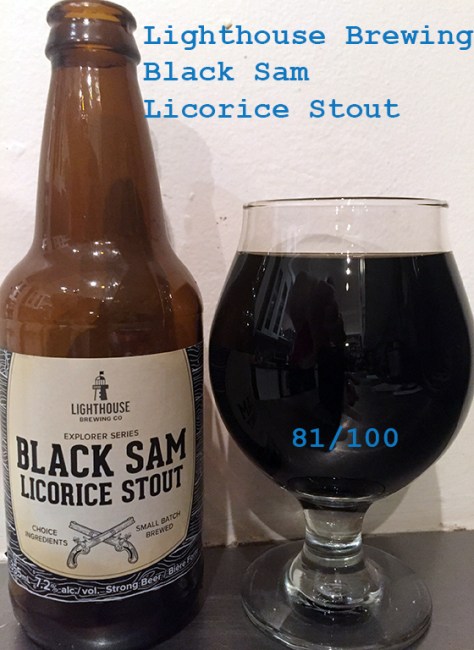
Day 2 – Lighthouse Brewing Co – Black Sam Licorice Stout

Beer 2 - Lighthouse Brewing - Black Sam Licorice Stout

Yesterday was an excellent start to this year’s advent calendar.  I really enjoyed the Anderson Valley Fall Hornin’ Pumpkin Ale and I hope that it’s going to be the tone for the entire calendar.  This morning I got out of bed early and went right to the calendar to grab my beer.  The tabs are a little small and my hands don’t really fit, so I asked my wife to assist.  Lo and Behold the second beer of the 2015 Calendar is a Lighthouse Brewing Co.’s Black Sam Licorice Stout.  For full disclosure, I’m not a huge fan of black licorice.  I’ll give this beer the benefit of the doubt but I may end up not liking it just because of that.

First off let me say that Lighthouse Brewing has a really fun website.  I am really impressed with the design if not the content.  So, I’d suggest you check it out.  Also, they posted a video of one of the crew talking a bit about the beer.  Check it out here.

Now, Lighthouse was founded in 1998 and is located on Devonshire Road in Victoria BC.  When founded, the demand for small batch craft beer was not really where it is today.  Brewing a Race Rocks Ale in the early days and delivering them to local pubs, Lighthouse quickly garnered a name for quality, local beer in a time when generic brands were king.

Lighthouse is made up of a crew of passionate people of which they don’t really provide much information.  Passion is a trademark behind the brewing at Lighthouse and they have a number of really interesting beers.  Besides their house series of beers, they also have an explorer series (of which the Licorice Stout is a member) as well as an uncharted series (currently just an Imperial IPA). Check out their full beer line-up here.

The beer that we have from Lighthouse today is one that has only recently been released in BC.  It’s also only available are certain private beer stores.  So, it’s one that I may not have a chance to try again for quite a while.  I’m excited.

Stouts are a dark beer made using roasted malts or roasted barley, hops, water and yeast.  Traditionally the term stout was used to describe the strongest (most alcoholic) porters, typically around 7-8%, produced by a brewery.  The reason for the name ‘stout’ was because these strong porters were often sold in stouter bottles than the standard porters.  This gave them the nickname ‘stout’ which eventually became the term used to describe the style of beer.

There are numerous styles of stouts ranging from Dry Stouts, to Porters, and Oyster stouts and my favorite Imperial Stouts.  While they had lost popularity in the early 20th century after the First World War, they have started to have a bit of an upswing due to the growing popularity in craft beer and breweries.  Stouts are very versatile allowing for a lot of creativity in adjuncts and flavouring and you can see a number of craft breweries doing stouts quite regularly.  Stouts also often age well making them a wonderful cellaring beer.  Without any further ado, my impression of Lighthouse’s Licorice Stout.

Appearance – Abysmal Black with no head (May just be my bottle).
Smell – Smells like licorice allsorts with a hint of chocolate.
Taste – Coffee and chocolate malt on the front with a sweet candy flavour finish.
Mouth feel – Coats the tongue, soft mouthfeel, low carbonation,
Overall – Flavourful stout with strong malt flavours and a good sweet finish. Not overly sweet. A good stout for someone who maybe doesn’t drink stouts often or is new to stouts. Not an overly heavy stout.
Do I like it?
– I did like it. It was an all-around good stout that I would enjoy drinking on a cold Winnipeg winter day/evening.  I’d definitely buy this, but I wasn’t blown out of the water.

81/100

Day 1 – Anderson Valley – Fall Hornin’ Pumpkin Ale

Beer 1 - Anderson Valley Hornin' Ale
As with every year, opening up that first advent calendar tab is incredibly exciting.  It brings me back to when I was a kid and my mom would buy us an advent calendar with little chocolates inside. Every day was a different chocolate and every day was a little bit of excitement.  Translate that to an adult version with beer instead of chocolate, I’m a happy camper. Nostalgic.

So, like I did last year, with sincere anticipation I opened the first tab and lo and behold, it was Anderson Valley’s Fall Hornin’ Pumpkin Ale.

Pumpkin Ales are typically fall seasonal beers, though Anderson Valley’s is available from August-October.  They are really quite varied.  Some of the style use actual pumpkin, others use yams, and some still don’t use either but just use pumpkin spices.  Some breweries drop hand cut pumpkins into the mash while others use pumpkin puree or flavoring at different points in the brew.  However you cut it, pumpkin beers are meant to represent fall by bringing forward those delicious pumpkin pie spices: cinnamon, nutmeg, allspice, cloves, and ground ginger.

Pumpkin Ales are typically mild with little to no bitterness, quite a malty backbone with the spices usually the most prominent flavor on the front.  Many will also have a slightly thick mouthfeel to them.  These types of beers are a trend that seems to have been quite popular here in Manitoba this past October with a huge number of pumpkin ales being available on the shelves.

The one we have today is from Anderson Valley, located in Boonvile, California.  I’ve had a number of Anderson Valley’s beers and many of them are available at Barley Brothers.  They make a fantastic Blood Orange Gose as well as a really nice Turkey Bourbon Barrel Aged Stout.  Both of these are quite tasty, especially fresh.

Anderson Valley Brewing Company was founded on December 26th, 1987.  Originally they brewed with a 10-barrel brewhouse located on the lower level of their original brewpub, the Buckhorn Saloon.  At the time, they were one of only 20 craft breweries in the country and they are considered to be one of the pioneers of the craft beer industry.  In 1996 they expanded to a 30-barel facility at the corner of highways 128 and 253 (Why they have a 128 series of beer).  They were able to double their production to 15’000 barrels and began bottling as well.  In 1998 they built a three-story Bavarian style brewhouse with beautiful copper kettles.

What is really unique about Anderson Valley is that in 2006 they installed an array of 768 solar panels on top of their brewhouse and employee parking structure.  Since then, they’ve relied on the Sun to provide 40% of the energy they need to run the brewery.  Along with this, they have a strong ecological commitment which they outline here.

Brew Master Fal Allen came to the brewery through a circuitous route starting in Hawaii before brewing at Red Hook and Pike Place in Seattle followed short stints at other breweries along the way including Anderson Valley twice (he left to brew in Singapore for a bit).  They have quite a large team and their website has little interviews with the members. I’d suggest checking it out.

I’d also suggest you take a look at the part of their website that outlines the language “Boontling”. It’s pretty interesting.  With that said, I’m going to rate the beer.

Appearance – Nut brown with very minimal head.

Smell – Caramel and malt, spices very present (nutmeg, allspice, cinnamon). Smells quite a lot like pumpkin pie.  What you’d expect.

Taste – Spices come through right on the front and are quite present. This moves into a malty smooth flavor that is really quite pleasant.

Mouth feel – Good carbonation with a slightly thick mouthfeel.

Overall – Very good pumpkin ale.  Well-spiced with a really solid malt backbone

Do I like it? – Yes, I do like it.  I am not a fan of all the pumpkin ales that are available.  There are some that I find really nice and pleasant and this happens to be one of them.  I enjoyed this beer and felt that it had a lot of nice spice notes to it combined with a smooth malty backbone.  Overall it was really quite nice.  I’d certainly buy this if I had the opportunity to do so.

85/100

Craft Beer Advent Calendar – 2015

My wife gifted me the Craft Beer Advent calendar again this year.  24 different beers from North America.  As I did last year, I plan to blog about these beers again.  Every day.  That means 24 posts, hopefully.  Here is how the post will be organized:

  • Beer name, location, and style of beer.
  • Description of the style, origins and information about the brewery.
  • Rating of the beer based on the following:
    • Appearance (Body, Colour, Head, Retention) (%5)
    • Smell (20%)
    • Taste (45%)
    • Mouth feel (Light, Medium, Heavy, Smooth, Coarse)(10%)
    • Overall (20%)
    • Do I like it (Yes or No) and why.

I want to make a note on the ratings.  I’m not a beer judge, and even if I was, I don’t always take stock in what people rate beers at.  Perhaps someone doesn’t like a particular style, or they don’t think the beer is good.  It doesn’t mean I, or someone else, won’t like it.  So, while I do plan on rating these beers, it is more for my own personal reasons to keep track of which ones I liked the best throughout the process.  You can take my ratings as you like, either listen or don’t.  Ultimately, I want people to try new beers and take chances.

There is one hitch.  I will be travelling from the 22nd of December until the 7th of January.  I will be doing my darndest to try these last two beers before I go, cheating slightly, but giving myself the opportunity to write the posts and have them get posted on the 23rd and 24th.

The first post will be coming later today.  In the meantime, here is my round up of last year’s Craft Beer Advent Calendar.

Craft Beer Advent Calendar – That’s a Wrap

Craft Beer Advent Calendar - All 24 Beer

The craft beer advent calendar, 2014, is complete.  It has been a really interesting 24 beers with a lot of variety and a veritable world tour of brews.  My wife asked if I’d be interested in doing this again.  ABSOLUTELY.  It was a fantastic experience that gave me the opportunity to try beers that I might never have the chance to try again.  I certainly hope I can for some of them, others…I’m okay not having them again.

So, let us wrap up the post with some statistics.

  • We had 24 beers all of which were a different style or variation on a style.
  • We visited:
o        United States (3)

o        Israel

o        Netherlands (2)

o        Germany (2)

o        Brazil (2)

o        Guyane Francaise

o        England (2)

o        Belgium

o        Norway

o        Austria

o        Scotland

o        Iceland

o        Mexico

o        New Zealand

o        Australia

o        Italy

o        Finland

o        South Africa

  • We managed to hit 6 continents through this with the following stats
    • Europe (Scotland, Finland, Norway, England, Iceland, Austria, Germany, Belgium, Netherlands, and Italy)
    • North America (United States, Mexico)
    • South America (Guyane Francaise, Brazil)
    • Asia (Israel)
    • Africa (South Africa)
    • Oceania (Australia, New Zealand)

Certainly the majority of the beers came from the European countries with absolutely NONE coming from Canada.  We had some repeat countries as listed above with 3 coming from the United States as the top contributor.

Now.  My favorite beer for the entire 24 days.  It’s actually rather funny that I should have my favorite beer on the fourth day of the Calendar!  My favorite beer from the entire calendar comes to us from:

Peak Brewing Company in Portland, Maine and is the Hop Blanc

Thanks so much for following along.  I hope that you enjoyed these reviews and found them useful.  I hope that you continue to follow along as I continue to blog about beer news and reviews.

– Beer Winnipeg

Craft Beer Advent Calendar – Day 24

Beer 24

Well, what a journey.  24 beers from around the world in a variety of different styles.  This process has given me a great deal of insight into brewing and breweries around the world.  I feel I have learned a great deal and I respect and appreciate beer a lot more than I did before this.  I certainly hope I have been able instill in some of you the same sort of sense of appreciation.

Our final beer comes to us from Sound Brewery out of Washington State in the USA.  Founded by Mark Hood and Brad Ginn, two seasoned home brewers, Sound Brewery began brewing in Poulsbo in February of 2011.  They have been brewing some award-winning beers that are Belgian inspired as well as traditionally northwest style beers as well.

The beer that has been given to us for the very last beer of this calendar is the Entendez Noël Belgian Quadrupel.  Sitting at 11.5%abv this is certainly a strong beer, bordering on a barley wine that promises to bring a good bitterness along with the warmth of malt.  Sitting at 50 IBU it is certainly up there with a good hoppy IPA for bitterness and having been brewed in the Belgian style, it promises to be a strong upfront beer with lots of complexity.  They’ve used Trappist yeast, Belgian Pilsner malts, cane sugar, and Motueka hops.

Quardrupels are a beer that is traditionally brewed by the Trappist Monks of Belgium.  Trappist Monks are renowned worldwide for their brewing abilities and rarely sell beer outside of their monasteries.  My brother had the opportunity to purchase 6 beers from one of the Trappist monasteries in a very limited release (100 cases of 6 beer each) in Toronto.  They were going for $100 a case, not cheap.

The name represents the strength of the beer and originates from the use of X on the bottles which indicated this.  So, a single would be marked with an X and indicate a weaker beer.  This is the strongest beer brewed by Trappist monks and would have been marked XXXX.  I’m rather excited to give it a try as it is the last beer of the Calendar.

Rating: 82/100

Appearance:  Clear amber colouring with no head.  Was concerned it was flat upon opening, luckily it just wasn’t.
Smell: Lemon notes, hoppy notes, some sweet honey smell and a bit of the caramel malt.
Taste: At first taste it is a light bodied, well balanced, sweet and hoppy beer with good citrus notes and some honey sweetness in there for flavor.  As I continued to drink the alcohol (11.5% if you remember) started to show itself making it taste like alcohol and overshadowing the other initial flavours.
Mouth feel: Light body with creamy mouth feel with light carbonation.
Overall: Nice, well-balance quardrupel that is better cold than warm.  As it warms the alcohol comes through a lot stronger and overpowers the other flavours.  They are quite nice though initially and this beer is well balanced and when I first sipped it I was surprised that I didn’t taste the alcohol.  As far as quadrupels go that is a good thing and this was definitely a strong contender.
Do I like it: No, I did not enjoy this beer.  It was good to begin with but as I continued to drink it the alcohol came through too strong.  Perhaps it is because it is such a strong beer and not my cup of tea, but it overpowered everything else for me and made it more of a chore to drink.  If I drank this one again, it would be outside on a cold Winnipeg day so that the beer would stay at that initial temp.

I have one more post that I will do for the Advent Calendar.  I will be summing up the 24 beers we have tried indicating their styles, location, and choosing my overall favorite.

Craft Beer Advent Calendar – Day 23

Beer 23

Today’s beer comes to us from Israel making it another Asian beer.  The beer is called Mosco and is brewed in the Judean Mountain in the village of Zanuch in Israel.  Annoyingly the website is down for them to update it and so I can’t find any information the brewer or brewery other than its location.  Seems that a variety of the beers in the calendar are trying to sabotage my ability to review them.  Oh well, we shall just move into the beer style and its review.

The beer is a Strong Blonde ale brewed in the Belgian method, so a Beligan Pale Ale essentially.  Blonde ales are very pale in color and are usually clear, crisp and dry.  Being brewed in the Belgian style means that it will use wheat malts which will make it cloudier than you’d expect but it should still hold the same coloring.  Blondes are from the Pale Ale variety of beer and usually have a lighter body with a subdued malt character and large hop profile.  They aren’t hoppy by any means, but they typically are not malty either.  Think of Coors or Coors light. Onto it then!

Rating: 67/100

Appearance:  Cloudy with a straw coloring and quite a bit of yeast sediment.
Smell: Yeasty on the nose with caramel malts and grassy/lemony notes from the hops.
Taste: Cool and crisp with a dry finish.  Slight fruitiness with a sickly sweetness making it taste far more alcoholic than the 6.5% abv should account for. Not as crisp as I would expect as the wheat malts make for a creamier mouth feel so the taste is subdued a bit on the end.
Mouth feel: Light body with creamy mouth feel with good carbonation.
Overall: Not the best Belgian style beer I’ve had in this variety nor even in this calendar.  The yeast sediment is a big turnoff for this style of beer as was the overly sweet character to it.  Overall this beer was below average for its style and not really a good showing for this calendar.
Do I like it: No, I did not enjoy this beer.  The sweetness was too much, it didn’t have the body and flavor that I would expect in a Belgian beer. I would not be interested in drinking this one again.

Craft Beer Advent Calendar – Day 22

Beer 22

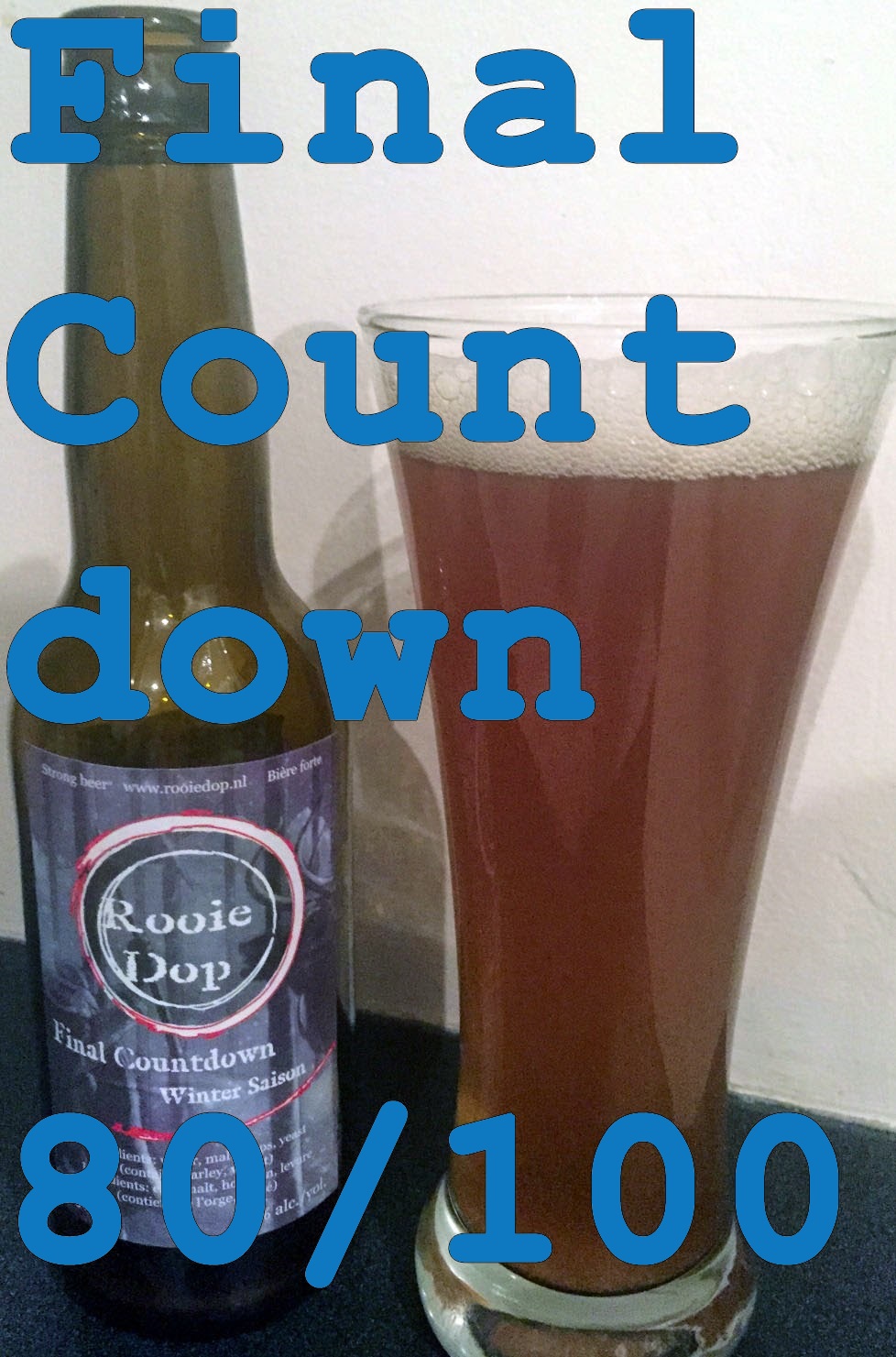
The 22nd beer from the advent calendar was a Winter Saison produced by the gents at Rooie Dop, a brewery out of the Netherlands.  Interestingly enough, while these gents do brew small batches at their own brewery located in Utrecht, their large batches are brewed by the Brouwerij De Molen who produced our 19th beer!

Rooie Dop is a brewery that wants to make some flavourful and sometimes experimental beers.  They do a lot of collaboration with their beers and don’t really care about the rules for brewing particular styles of beer, they “care about flavor” as they say on their website.  The brewery was started y three friends some years ago.  Mark Strooker is the one who calles the shots at the brewery and is an IBU extremist according to his profile (I like this guy).  Overall the brewery sounds unique, creative, and over all talented based on being rated one of ratebeer.com’s 2013 best.

The beer we get to try today is a Winter Saison.  Again, Saison’s are broadly defined pale ales that are higher in alcohol content, highly carbonated and generally spiced.  They are traditionally a Belgian style of beer which means they include the wheat and barley malts which produce a creamier mouth feel.  This particular Saison is called “Final Countdown” and was produced using smoked malts and rye.  It was specifically made for inclusion in this year’s Advent Calendar and that is pretty exciting. Onto the beer!

Rating: 80/100

Appearance: Cloudy amber colored beer with good head that dissipates rapidly.
Smell: Smoke and apricot are right at the front.  Interesting combination that isn’t unappealing, actually.
Taste: Very smoky with a hint of fruit notes in there.  Sweet malty balance that goes well with the smokiness of the beer.  Reminded me a little bit of being at a  campfire though, which wasn’t wholly appealing, but not terrible either.
Mouth feel: Good carbonation, creamy mouth feel, light body.
Overall: Definitely a unique beer for me.  I’ve had smoked beers out of Germany before which taste like you are drinking the campfire.  This one was lighter and had that pleasant creaminess of a saison.  As a Saison I’d say it was good with a unique flavor balance and some risks taken that turned out pretty okay.
Do I like it: I enjoyed this beer for the risk that was taken in producing it.  Adding smoked malts to a saison is an interesting idea that I didn’t know if it would work.  Overall it worked well enough to taste good, but I wouldn’t drink it again.

Craft Beer Advent Calendar – Day 21

Beer 21

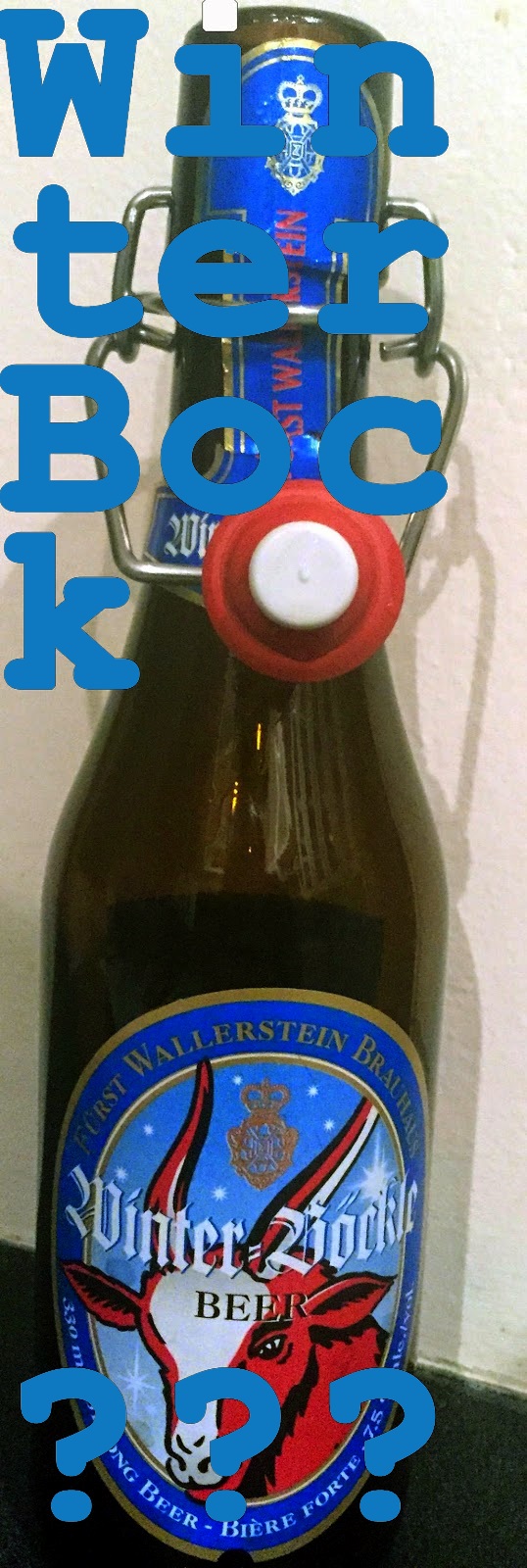
Well, today wasn’t a bad day, although one of the beers in my advent calendar had gone bad as it had not sealed properly.  I opened it, poured it and right away could tell it had turned.  No carbonation at all and a sour smell.  I did taste it and the taste had turned also.  I will not include a rating of this beer only details about the brewery as I did not feel it was fair to rate a beer that had turned.

The beer today is from Fürst Wallerstein Brauhaus in Wallersten, Germany.  Founded in 1999, it is a large scale operation that produces malt based beverages including beer.  The beer that we had in the advent calendar today was their Winter Bock.  We have seen a bock before, they are a strong lager made in Germany with a variety of subtypes.  In this instance a winter bock is a bock that has been spiced, in this case with molasses and a bit of pepper, to give it a more winter warmer/ale style flavor.

There are not many details that I could find on the brewery, so I apologize for the curtness of this post.  As I said, the beer had gone bad, so I moved on to the next one!