All posts by beerwinnipeg

Watching and blogging about the growing craft beer landscape in Manitoba

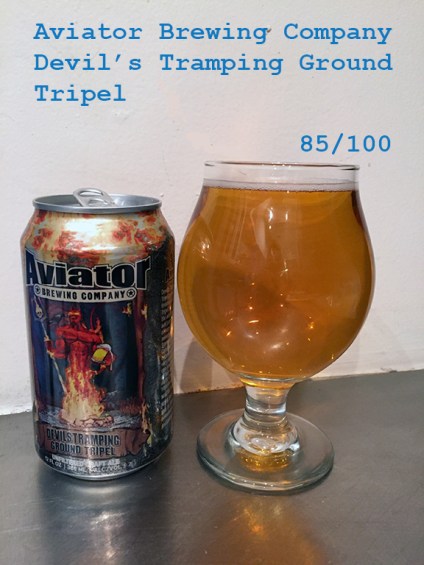
Day 5 – Aviator Brewing Company – Devils Tramping Ground Tripel

Day 5 - Aviator Brewing Company - Devils Tramping Ground Tripel

I love the craft beer advent calendar, I really do. It’s got a lot of interesting beers from breweries I may not otherwise get a chance to try.  What I don’t like about the calendar is the way the beers are put inside.  I’ve had major issues with them falling down this year, especially the cans, and today I even ended up taking out the wrong beer.  Somehow my day 17 beer fell down and pushed my day 5 beer out of the way.  My wife ended up taking them all out for me (so I couldn’t peak) and putting them in individual wrapping with numbers on them.  I still love the calendar, just some friendly feedback (if you’re reading).

The fifth beer of the calendar is Aviator Brewing Company’s Devil’s Tramping Ground Tripel.  As the name suggests, this beer is a Beligan Tripel.  Aviator Brewing Company is located Fuquay Varina, North Carolina and has been open since 2008.

Mark Dobel opened Aviator in an old airplane hangar (hence the name) in November of 2008.  At the time he was the only employee and he brewed into two used dairy tanks.  Initially only brewing 300 gallons of beer, he quickly outgrew the dairy tanks.  In January of 2009, after adding a 30 barrel system, they began distribution to the triangle area of North Carolina.  I should say he because at this point they still only had 1 employee.

In April 2010 they moved from the hangar and increase capacity as well as employees up to four.  In 2012 they added a canning line as well as new beers including the one we are trying today, and by 2014 they had canned over 1.2 million beers.  In June of 2015 they were up to canning 3.5 million beers and had moved to a new 5 acre site.  At present, they are looking to expand to another 5 acre site and build a restaurant as well.  The website provides a good look at all the milestones along the way.  The beers sold by Aviator range widely from an IPA to a Pils to an Imperail Belgian Tripel.  They all have fun names and labels, check them all out here.

The style of beer we are drinking today is a Beligan Tripel. The name Tripel comes from the brewing process of this beer.  Essentially it means you are adding three times the malt as you would in a Beligan “simple”.   This increases the sugar content in the beer and results in a highly alcoholic beer.  The best Belgian tripels hide this strong alcoholic flavor making them delicious but dangerous.  They have a surprisingly light color, typically bright yellow to golden, which is a result of the addition of Belgian candy sugar (up to 25% sucrose).  Tripels are the most brewed of the Belgian styles and are highly adored due to their deep color, soft maltiness and unique yeast flavors.  Even with their high ABV (usually 8-12%) they are highly approachable when done right.  Let’s get to the beer.

Appearance – Clear, golden in colour with a good 1” of head that fades quickly leaving only a remnant of what was.
Smell – Almost like soap.  Not bad soap, the good fruity soap, like tangerines or grapefruit.
Taste – Nice sweetness with hints of pepper, mild fruit flavours and good malty sweetness. Definitely can tell it is alcoholic, but not in a bad way.
Mouth feel medium bodied, low carbonation, refreshing and crisp.
Overall – Really good.  The smell through me off a little bit but once I delved into the beer itself I was really impressed.  I like the depth of flavours with the tangerine and sweet fruits combined with the spice and malty notes. Nice ester profile with sweet date in there as well.
Do I like it?
– Yep, I really like. I’ve been growing in my palate for beer and last year I might not have liked this as much. For me this a strong Belgian Tripel with a lot going for it. The smell, while a bit weird, did not translate into taste. It’s one I’d like to have again.

85/100

Beer 4 – Strathroy Brewing Company – 1815 XXXX Peacemaker

Beer 4 - Strathroy Brewing Company - 1815 XXXX Peacemaker

Things are really starting to heat up in Manitoba in respect to the craft beer scene.  Peg Beer just launched their merchandise site, announced some of there beers and launched the PEG 100 club.  The memberships went like hotcakes and are certainly going to be worth the entrance.  We also have Torque Brewing who have officially signed their lease and are getting things organized at the brewery. Barn Hammer is coming along as well and are finalizing preparations on the brew house.  Needless to say after I get back to the Peg in January, it’s going to be a different beer scene and I’m very excited for that.

This morning I had a much easier time getting the bottle of beer out of the advent calendar.  I think it’s just the cans that are going to be a pain.  Really hard to get a grip on those guys.  Today’s beer comes to us from the small municipality of Strathroy-Cardoc and is Strathroy Brewing Company’s 1815 XXXX Peacemaker.

In June of 2014, after months of work converting an old flour mill into a micro-brewery, Alex Martin produced his first batch of 1812 Independence Pale Ale.  He turned his homebrew hobby into a business with the help of friends and family.   Alex brought his older brother Matthew, an avid home brewer and chemical engineer, into the business.  Matthew combines his brewing knowledge and scientific expertise into the brewing of Strathroy Brewing Company’s beers.

They’ve both worked very hard to get their beer into local pubs and restaurants.  Alex is a history buff and thus the name of the beer as 1812 Independence Ale, referencing the war of 1812.  The beer we have today, the 1815 Peacemaker, represents the treaty of Ghent, Belgium, the end of the Napoleonic Wars in Europe and over 200 years of Peace between Canada and the USA.  Check out Alex talking about the beer.

This beer is a Belgian Brown Porter.  Now, this style of beer is a combination of a British Porter and Belgian strong ale.  Porters, like stouts, are dark and heavy beers that have been malted heavily.  They are rich and often flavored with chocolate, coffee, or caramel malts to give them some balance to that richness.  Belgian dark strong ales are also malty with fruity esters and bready malts.  The combination of these two styles should make for a rich malty beer with subtle spice and fruit esters. I’m excited to give it a try.  You may see this beer called a Traditional Ale.  This is a catch all for beers that do not fit within particular styles and are typically ancient or old styles not brewed often.

Appearance – Dark Amber.  Think tan head that fades quickly leaving slight lacing.
Smell – Black cherry, toffee, caramel notes.
Taste – Slightly sweet on start and bitter on finish. Interesting transition between the two.
Mouth feel – Almost a little too light for such a dark beer, very thin in consistency with lots of carbonation.  Slightly bitter finish.
Overall – It’s ok.  It’s a bit lacking in the flavour department. Decent for the style.
Do I like it?
– It’s okay.  I find that it lacks any depth of flavour.  I get a lot on the nose and I’d like to see that translate at least somewhat into the taste. Unfortunately it doesn’t.

73/100

Day 3 – Aspen Brewing Company – Independence Pass Ale

Beer 3 - Aspen Brewing Company - Independence Pass Ale

Every morning when I wake up I am hit with a little twinge of excitement to see what new brew I will find today. This calendar is really something that brings a lot of joy to this craft beer lover’s morning.  This morning was a little bit more frustrating given that the particular beer had shifted and was rather stuck.  After about 10 minutes of shifting, opening the top of the box (my wife did so I wouldn’t peek) and shifting things around, we managed to remove the beer from it’s precarious position.

The third beer of the craft beer advent calendar is Aspen Brewing Company’s Independence Pass Ale.

Aspen Brewing Company was founded in 2008 by Duncan Clauss.  He had recently graduated from the University of Colorado at Boulder and wanted to bring craft beer back to Aspen.  Previously Aspen had been home to Flying Dog Brewing Co. When Flying Dog moved all of it’s production to Frederick Maryland in 2006, it left a gap in the craft beer market in Aspen. Duncan and his crew of five, including head brewer PJ Goudreault, filled this gap and has been producing beers that represent the outdoor lifestyle of Aspen for the past 7 years.

Aspen Brewing Company focuses a lot of it’s profits and beer on the local community putting philanthropy and community support as one of it’s primary tasks.  They’ve supported dozens of local community ventures and take applications every year from those non-profits seeking support.  Aspen is also committed to the environment being one of three breweries to sign the Clean Water Act with environment Colorado and the US Environmental protection agency.  They’ve also signed onto the Brewers for climate change declaration.  They also practice a number of efficiency measures to keep their carbon foot print as low as possible.  Check out what they do for the environment here.

Aspen brews a number of beers divided into three “series” of beers.  The first is their Silver Queen Series.  The beer we have today comes from this series and it is their year round series of beers.  They also have a series of Seasonal beers as well as a Temerity Series of barrel aged beers.   The beer we have from them, the Independence Pass Ale, is a super-hopped IPA.  The beer is named Aspen’s eastern boundary and 12,095ft high elevation pass.  It comes in a 7% abv (alcohol by volume) and 62 IBUs (International Bitterness Units).

IPAs or India Pale Ale, have a storied history. The first known use of the term comes from the Sydney Gazette and New South Wales Advertiser in 1829.  At this time, they were also referred to as a “pale ale as prepared for India”, “East India pale ale”, and “Export India Pale Ale”.  These types of IPAs were widely popular amongst the East India company and, while considered very hoppy, they were not much stronger than other beers brewed at this time. If you’re curious about IPAs check out Wikipedia or IPA Beer.

While these beers are part of the pale ale family, they are strongly hopped and often showcase the variety of flavours and complexities that can come from the simple ingredients used to brew beer.  Many will say the IPAs are an acquired taste, and they are rather unique, the bitterness brought by the use of a large quantity of hops is not for everyone. Now, onto this specific beer.

Appearance – Pours hazy, medium copper colour with about an inch of white head.
Smell – Passionfruit and blood orange on the nose.  Very fruity nose.
Taste – Very sweet for an IPA. Passionfruit comes through on the taste and is really balanced with a subtle bitterness that doesn’t denote the 62 IBUs this beer contains.
Mouth feel – smooth mouthfeel that lingers slightly with sweetness.
Overall – Pretty good IPA.  Not over the moon about it. The balance of the sweetness and the bitterness makes it a good IPA for someone who isn’t really into bitter IPAs and might be a good launching pad for those folks.
Do I like it?
– I think it is okay. I’m not going to go out and seek this particular IPA, there are so many really strong ones, but if I was at a friends and they had it I’d be happy to drink it.

76/100

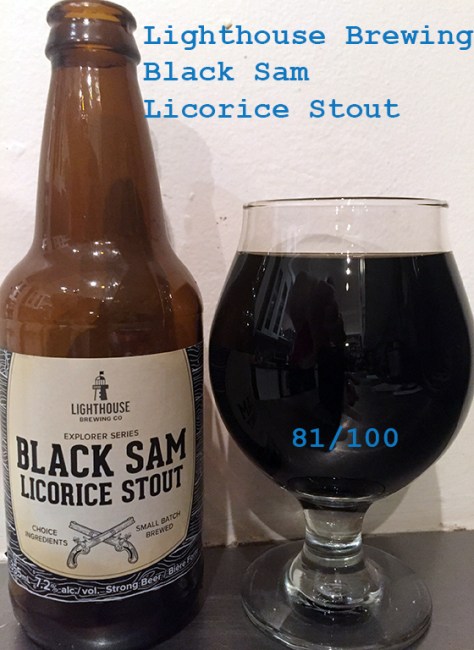
Day 2 – Lighthouse Brewing Co – Black Sam Licorice Stout

Beer 2 - Lighthouse Brewing - Black Sam Licorice Stout

Yesterday was an excellent start to this year’s advent calendar.  I really enjoyed the Anderson Valley Fall Hornin’ Pumpkin Ale and I hope that it’s going to be the tone for the entire calendar.  This morning I got out of bed early and went right to the calendar to grab my beer.  The tabs are a little small and my hands don’t really fit, so I asked my wife to assist.  Lo and Behold the second beer of the 2015 Calendar is a Lighthouse Brewing Co.’s Black Sam Licorice Stout.  For full disclosure, I’m not a huge fan of black licorice.  I’ll give this beer the benefit of the doubt but I may end up not liking it just because of that.

First off let me say that Lighthouse Brewing has a really fun website.  I am really impressed with the design if not the content.  So, I’d suggest you check it out.  Also, they posted a video of one of the crew talking a bit about the beer.  Check it out here.

Now, Lighthouse was founded in 1998 and is located on Devonshire Road in Victoria BC.  When founded, the demand for small batch craft beer was not really where it is today.  Brewing a Race Rocks Ale in the early days and delivering them to local pubs, Lighthouse quickly garnered a name for quality, local beer in a time when generic brands were king.

Lighthouse is made up of a crew of passionate people of which they don’t really provide much information.  Passion is a trademark behind the brewing at Lighthouse and they have a number of really interesting beers.  Besides their house series of beers, they also have an explorer series (of which the Licorice Stout is a member) as well as an uncharted series (currently just an Imperial IPA). Check out their full beer line-up here.

The beer that we have from Lighthouse today is one that has only recently been released in BC.  It’s also only available are certain private beer stores.  So, it’s one that I may not have a chance to try again for quite a while.  I’m excited.

Stouts are a dark beer made using roasted malts or roasted barley, hops, water and yeast.  Traditionally the term stout was used to describe the strongest (most alcoholic) porters, typically around 7-8%, produced by a brewery.  The reason for the name ‘stout’ was because these strong porters were often sold in stouter bottles than the standard porters.  This gave them the nickname ‘stout’ which eventually became the term used to describe the style of beer.

There are numerous styles of stouts ranging from Dry Stouts, to Porters, and Oyster stouts and my favorite Imperial Stouts.  While they had lost popularity in the early 20th century after the First World War, they have started to have a bit of an upswing due to the growing popularity in craft beer and breweries.  Stouts are very versatile allowing for a lot of creativity in adjuncts and flavouring and you can see a number of craft breweries doing stouts quite regularly.  Stouts also often age well making them a wonderful cellaring beer.  Without any further ado, my impression of Lighthouse’s Licorice Stout.

Appearance – Abysmal Black with no head (May just be my bottle).
Smell – Smells like licorice allsorts with a hint of chocolate.
Taste – Coffee and chocolate malt on the front with a sweet candy flavour finish.
Mouth feel – Coats the tongue, soft mouthfeel, low carbonation,
Overall – Flavourful stout with strong malt flavours and a good sweet finish. Not overly sweet. A good stout for someone who maybe doesn’t drink stouts often or is new to stouts. Not an overly heavy stout.
Do I like it?
– I did like it. It was an all-around good stout that I would enjoy drinking on a cold Winnipeg winter day/evening.  I’d definitely buy this, but I wasn’t blown out of the water.

81/100

Day 1 – Anderson Valley – Fall Hornin’ Pumpkin Ale

Beer 1 - Anderson Valley Hornin' Ale
As with every year, opening up that first advent calendar tab is incredibly exciting.  It brings me back to when I was a kid and my mom would buy us an advent calendar with little chocolates inside. Every day was a different chocolate and every day was a little bit of excitement.  Translate that to an adult version with beer instead of chocolate, I’m a happy camper. Nostalgic.

So, like I did last year, with sincere anticipation I opened the first tab and lo and behold, it was Anderson Valley’s Fall Hornin’ Pumpkin Ale.

Pumpkin Ales are typically fall seasonal beers, though Anderson Valley’s is available from August-October.  They are really quite varied.  Some of the style use actual pumpkin, others use yams, and some still don’t use either but just use pumpkin spices.  Some breweries drop hand cut pumpkins into the mash while others use pumpkin puree or flavoring at different points in the brew.  However you cut it, pumpkin beers are meant to represent fall by bringing forward those delicious pumpkin pie spices: cinnamon, nutmeg, allspice, cloves, and ground ginger.

Pumpkin Ales are typically mild with little to no bitterness, quite a malty backbone with the spices usually the most prominent flavor on the front.  Many will also have a slightly thick mouthfeel to them.  These types of beers are a trend that seems to have been quite popular here in Manitoba this past October with a huge number of pumpkin ales being available on the shelves.

The one we have today is from Anderson Valley, located in Boonvile, California.  I’ve had a number of Anderson Valley’s beers and many of them are available at Barley Brothers.  They make a fantastic Blood Orange Gose as well as a really nice Turkey Bourbon Barrel Aged Stout.  Both of these are quite tasty, especially fresh.

Anderson Valley Brewing Company was founded on December 26th, 1987.  Originally they brewed with a 10-barrel brewhouse located on the lower level of their original brewpub, the Buckhorn Saloon.  At the time, they were one of only 20 craft breweries in the country and they are considered to be one of the pioneers of the craft beer industry.  In 1996 they expanded to a 30-barel facility at the corner of highways 128 and 253 (Why they have a 128 series of beer).  They were able to double their production to 15’000 barrels and began bottling as well.  In 1998 they built a three-story Bavarian style brewhouse with beautiful copper kettles.

What is really unique about Anderson Valley is that in 2006 they installed an array of 768 solar panels on top of their brewhouse and employee parking structure.  Since then, they’ve relied on the Sun to provide 40% of the energy they need to run the brewery.  Along with this, they have a strong ecological commitment which they outline here.

Brew Master Fal Allen came to the brewery through a circuitous route starting in Hawaii before brewing at Red Hook and Pike Place in Seattle followed short stints at other breweries along the way including Anderson Valley twice (he left to brew in Singapore for a bit).  They have quite a large team and their website has little interviews with the members. I’d suggest checking it out.

I’d also suggest you take a look at the part of their website that outlines the language “Boontling”. It’s pretty interesting.  With that said, I’m going to rate the beer.

Appearance – Nut brown with very minimal head.

Smell – Caramel and malt, spices very present (nutmeg, allspice, cinnamon). Smells quite a lot like pumpkin pie.  What you’d expect.

Taste – Spices come through right on the front and are quite present. This moves into a malty smooth flavor that is really quite pleasant.

Mouth feel – Good carbonation with a slightly thick mouthfeel.

Overall – Very good pumpkin ale.  Well-spiced with a really solid malt backbone

Do I like it? – Yes, I do like it.  I am not a fan of all the pumpkin ales that are available.  There are some that I find really nice and pleasant and this happens to be one of them.  I enjoyed this beer and felt that it had a lot of nice spice notes to it combined with a smooth malty backbone.  Overall it was really quite nice.  I’d certainly buy this if I had the opportunity to do so.

85/100

Craft Beer Advent Calendar – 2015

My wife gifted me the Craft Beer Advent calendar again this year.  24 different beers from North America.  As I did last year, I plan to blog about these beers again.  Every day.  That means 24 posts, hopefully.  Here is how the post will be organized:

  • Beer name, location, and style of beer.
  • Description of the style, origins and information about the brewery.
  • Rating of the beer based on the following:
    • Appearance (Body, Colour, Head, Retention) (%5)
    • Smell (20%)
    • Taste (45%)
    • Mouth feel (Light, Medium, Heavy, Smooth, Coarse)(10%)
    • Overall (20%)
    • Do I like it (Yes or No) and why.

I want to make a note on the ratings.  I’m not a beer judge, and even if I was, I don’t always take stock in what people rate beers at.  Perhaps someone doesn’t like a particular style, or they don’t think the beer is good.  It doesn’t mean I, or someone else, won’t like it.  So, while I do plan on rating these beers, it is more for my own personal reasons to keep track of which ones I liked the best throughout the process.  You can take my ratings as you like, either listen or don’t.  Ultimately, I want people to try new beers and take chances.

There is one hitch.  I will be travelling from the 22nd of December until the 7th of January.  I will be doing my darndest to try these last two beers before I go, cheating slightly, but giving myself the opportunity to write the posts and have them get posted on the 23rd and 24th.

The first post will be coming later today.  In the meantime, here is my round up of last year’s Craft Beer Advent Calendar.

Growler Program Expansion

20151125_175159000_iOS

When you have a thesis you are trying to write on a deadline it certainly makes the “more fun” type of writing more difficult.  With that said, in 5 days I will be starting my 24-day journey through the beers and breweries of the Craft Beer Advent Calendar.  This is what really got me into blogging about beer last year and was a really interesting and educational process.  Take a look at my round-up from last year here.

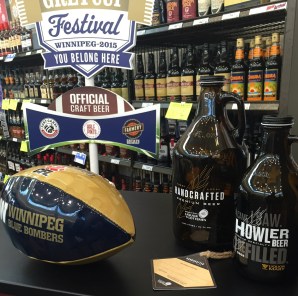
I just had the opportunity to attend a media event for the expansion of the Growler bar program in Manitoba.  Robert Holmberg, Vice President of Liquor Operations for Manitoba Liquor and Lotteries was on hand as well as Ron Lemieux, Minister Responsible for Manitoba Liquor and Lotteries.

20151125_174828000_iOS
Minister Lemieux and VP Robert Holmberg filling some howlers

They announced the first phase of a three-year plan: the expansion of the current growler bar program to four new locations as well as the introduction of the 946ml “Howler”.  There will also be an expansion to 7 new beer vendors over the next 6 months bringing the total number of growler bars in the province to 18.

20151125_172323000_iOS

As well as seeing more growler bars, beers from outside the province are now being considered for the growler bar.  Robert Holmberg told me they will be using their internal “craft style beer” definition as a means of determining if a brewery fits their criteria with emphasis placed on uniqueness, style and saleability.  (I imagine they’ll use the same selection criteria they have for listing beers.)  He also indicated it might not be the case that all liquor marts have the same beers on the growler bar, promoting variety and customer experimentation.

Robert Holmberg also said while focus will be placed on local breweries, Manitoba wants to respect free trade and make sure the process is fair for everyone. Operationally it is easier for MLL to sell local breweries as they are right here in the province and it is easier to get the beer.  For beers coming from outside the province and/or country, there are a number of logistical factors that come into play.  Still, if the breweries meet the “uniqueness, style, saleability” criteria, why not have more selection?

20151125_171903000_iOS
Beers on tap at Growler Bar Expansion. Two from outside Manitoba (Blue Point (ABinBev owned N.Y. brewery) and Tree Brewing (Kelowna, BC).

I also asked Mr. Holmberg about the expansion process and if this, being the first year of expansion, means we might eventually see growler bars in all of the Liquor Marts around the province.  He told me this is not the plan, adding that growler bars usually get their start in microbreweries and this is where he thinks it will return.  With a number of breweries slated to open – four by next summer (hopefully) and many more to come (last count was up to 16) – Mr. Holmberg believes people will want to get their growlers filled at the source.  He said he can see the expansion going to a certain point before MLL starts looking at retraction.  In the end, they will listen to what consumers say.

Here is the press release from the event, which gives a few more details.  For me, the howler is a smart idea and the expansion of the growler bar program can only increase access to good beer.  While I’m not completely excited with an AB in Bev beer being listed on the growler bar (Blue Point), overall things seem positive.  Manitoba is far behind other provinces in the craft beer market and it is good to see we are starting to catch up.

– Beer Winnipeg

MLCC Beer Listing Process

So, one thing that I’m asked and that I myself am really curious about, is the process the Manitoba Liquor Commission uses for selecting beers to sell.  Being the ever curious beer drinker I am, I started investigating and got a great deal of information from the source.

Laurel at the MLCC was incredible helpful and spent a great deal of time pulling the information together for me. I want thank her right from the get-go for her help in this matter.  Thank you Laurel!

The MLCC has a listing committee who follow the same procedures for every type of liquor product that is going to be listed for sale in Manitoba.  Producers and product reps are required to submit a listing application and sample of their product for review by the “Manitoba Liquor & Lotteries Listing Committee”. (I’d like to be on that committee please.)

The decision as to whether to list a given product is based on the following factors:

  • sales statistics/trends from the previous year;
    • They evaluate statistics and trends based on the country of origin, style of product, packaging (whether it is a single serve/multi pack, can or bottle and container size), etc.
  • sales history for the brewery or brand family;
  • beer scores from online sources;
  • taste profile (taking into account all the different customer types that purchase beer);
  • innovation of labels;
  • limited, extremely rare special releases;
  • marketing strategy provided from agent/representative; and,
  • whether the product meets our social responsibility mandate.

Overall there are a lot of factors that go into considering whether a product is listed or not just at the committee level.  There are a number of other factors taken into consideration; ones the public can have a direct impact on and some we cannot.  The MLCC Category Manager and Product Ambassador for Beer regularly meet with existing producers to discuss the beers they are planning on releasing and to see if there are any seasonal or limited release offerings (like all the pumpkin beer we saw on the shelves in the fall). They also look at whether they are planning to send a representative to participate in tasting festivals, such as Flatlanders.

The main way we, the public, can have a direct impact on the liquor listing process is by requesting products.  Laurel told me this is a key factor they use for determining product listing. These requests can be submitted by email, social media, or local blogs.  I guess I better start spending more time talking about beers I want to come to Manitoba.

The MLCC is always looking for products and producers who are creating a buzz with customers; making these facts known through contacting the LC is one way we can hopefully see our favourite beers show up on Manitoba shelves. As Laurel said “we are listening and taking notes.”

When listing, the MLCC says they try to ensure there is a broad representation of beers from around the world as well as a broad representation of styles.  They use customer demand and buying habits as a means of determining what styles of beer to carry.  Over the past two years they have been trying to list more one-time seasonal beers from breweries to give more variety to the core list of beers they always carry and are constantly looking to add to their craft beer base. Laurel said “This year we have added to our core listings and will look to maintain if not increase the core listings going forward.”

An exciting point: Manitoba Liquor Marts are committed to supporting all licensed and regulated local breweries that are producing quality beer products.  This means that if you open a brewery in Manitoba and produce good beer that is legal to be sold, it will be carried at Manitoba Liquor Marts.  This is something I know I am excited to see as a slew of new craft breweries work toward their openings. I can’t wait to fill my fridge with a variety of local offerings.

Laurel wanted to highlight some of the initiatives that are coming out of the Manitoba government’s Craft Breweries Strategy.  She said this isn’t a complete list, but some of the steps that have been taken or are coming down the pipe include:

  • the expansion of craft beer growler bars (detailed announcement coming in late November/early December);
  • launching a website for new craft breweries to find information and local resources to help get their businesses started – see ManitobaBrewHub.ca;
  • licensing tasting rooms adjacent to local breweries; and
  • other internal process and policy reviews.

The big thing Laurel noted – I know I’ve seen this as well – is the vocal nature of the craft beer community.  Manitobans are starting to ask for better beer and there are a lot of people, myself included, who are passionate about good quality beer on Manitoban shelves.  Laurel said this group is “driving the demand for new and unique craft beers in the marketplace.”

There is a lot of information here and I am providing it to you to review and come to your own conclusions on what you think.  There are certainly some aspects of the criteria that I don’t agree with; I don’t think using previous years’ sales metrics will give an accurate measure of how well a new beer will sell here, but, from a corporate perspective, I understand it’s an important measure.  In the end, the MLCC needs to balance listing new products with being financially sound and it is heartening to see there are serious efforts being made to list more craft beers in Manitoba.

So, to you the people who read this blog, take action in the ways that we can! Start contacting the MLCC and let them know what beers you want to see on the shelves in Manitoba.  Be vocal, be passionate, and let’s keep pushing this cart forward.

First day of Beer School

20151013_220218000_iOS

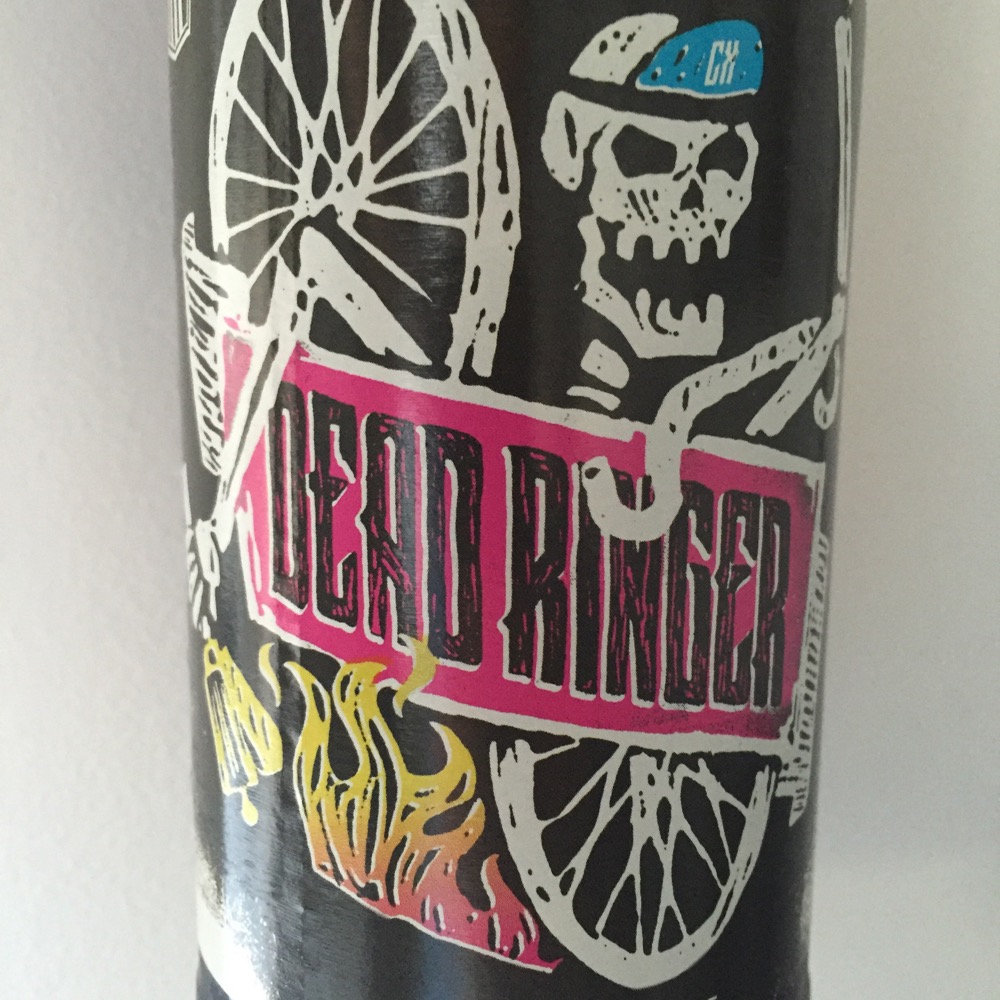
I sat down with a couple of friends that you might describe as beer novices.  They tend to drink the same beers and are hesitant to explore others. I wanted to talk to them to find out what keeps them from trying different beers, what they like and dislike in beer, and to drink a Half Pints Dead Ringer with them and get their opinion on it. So, let’s get to it.

Frank and Jason are average beer drinkers.  Frank tends to go for an Alexander Keith’s while Jason will often go for a Miller Light.  They go for these beers because they like the taste and they are refreshing.  Jason said he likes Miller Light because it is “smooth and refreshing” and he likes to have it after working out or doing work in the yard. While both of them have had a number of different beers they both tend to stick with these two beers of choice.

Frank and Jason are both willing to try new beers they just have some difficulty with experimenting and are looking for beer that they like to drink.  Jason likes to drink good quality union made beer that is a value, or a beer with some history.  Overall they both want to drink beers that are refreshing and that you don’t have to “work” to drink.

Frank enjoys “being able to drink the whole thing and something that tastes good cold. I don’t like bitterness in beer.” While Frank is pretty clear on what he doesn’t like, Jason doesn’t really know what he doesn’t like.  He just knows that he doesn’t like it because it’s “really strong”.

We ended up getting into a conversation about styles of beer. Both Frank and Jason didn’t really know very many different styles and Jason said “I never refer to them by style, I don’t know enough.”  Even so, Jason has recently gotten the “strength” to try different beers.  He says that the growler bars have been a big help in that for him.  He is now loving Sultana Gold and drinks that along with his Miller Light.

After getting this basic information down, I cracked open the bottle of Dead Ringer.  We talked about what style of beer it was, what they should expect in the taste and what IBUs were. I’m doing this with them as a means of education and to help them navigate beers they may not otherwise try. After a short conversation we started drinking.

Jason really liked it but said it isn’t something he “would have if [he] was out for wings.”  Frank also liked it thinking that it wasn’t overly bitter and thought, if he could get it, he’d drink it. Frank lives outside the city and relies a lot on the beer vendors which really limits his beer choice.  They both described it as a “sipping beer”.

Talking about the beer itself Jason raised some really interesting points. He said that he probably wouldn’t have bought this beer if he saw it in the Liquor Marts because of the label and the fact it has “strong beer” written on it.  Not being familiar with IBU, styles, and what to expect, he would be turned off by the “skeleton on the label”.

Jason said “A lot of what stops me from trying more is cost and fear of knowing what it tastes like. I like going to beer fest with someone who knows what they are talking about. I think sample packs are a really good way to try new beer”.  Jason has kids and doesn’t go out that often, so he relies on the Liquor Marts for his beer.  He is hesitant to try new beers because he doesn’t want to spend the money and not like it.  So, for now, his fridge is 15 miller light and 8 sultana gold.

Out of this experience I learned a few things. I learned that being knowledgeable about beer is important.  Without some sort of general beer knowledge, it might be difficult to take that first step into trying a beer you’ve never had before.  Jason wants to try different beers but he doesn’t know anything about them and doesn’t want to waste his money.  Having the opportunity to try the beers before buying them or having someone who is knowledgeable about beer to help him make his decision would be helpful.

Jason said that he was thankful to have a friend who know about beer.  We attended Flatlanders together and I was able to help him understand the various styles of beers he was trying and explain things about the beers to him before he tried them. Having this conversation made him more open to trying beers he might not otherwise try.  I think having good knowledgeable staff and opportunities for beers to be tasted would go along way into helping people take that first step.

We dubbed this evening “Beer School” and I think we are going to continue it.  Jason and Frank both were really interested in learning about Dead Ringer and talking about the style of beer.  So, we are going to continue down this path trying beers from different styles and talking about them.

Defining Craft Beer in Canada

Whenever I am talking to people about the virtues of craft beer there is invariably one question that I get asked: What is craft beer?  To answer that question we really need to look at what a craft brewery is.

This is a question that seems very difficult to answer right now.  While there are craft beer associations popping up across Canada (Ontario, British Columbia, Alberta, and New Brunswick, Nova Scotia) they do not necessarily represent all of the local breweries in their area nor do they seem to offer a clear definition of what craft beer might be.

Provincial governments, who regulate liquor sales in their respective provinces, have no clear definition of craft beer in their legal frameworks.  Instead, what does exist are terms like “small brewery, microbrewery, macrobrewery and nanobrewery” in which sizes in hectolitres are used to determine the classification mostly for taxation purposes.  Even these definitions vary widely.  In Saskatchewan to be considered a small brewery you need to produce less than 5,000 HL, while in New Brunswick it is 1.5 Million HL.  The British Columbia craft beer association represents breweries that produce less than 160,000 HL each year (Source) while Ontario Crafter Brewers set their limit at 400,000 HL. (Source)

Yet none of this actually defines what craft beer actually is.  The Ontario Craft Brewers association gives a definition, similar to that of the US brewers’ association, to define what craft beer means to their members saying:

Ontario Craft Brewers (OCB) are local and defined as:

SMALL – Most Ontario Craft Brewers are small and many are family-owned. The current maximum size of an Ontario Craft Brewer is 400,000 hectolitres of annual worldwide beer production.

INDEPENDENT – Locally-owned and is not significantly controlled by a beer company who does not qualify as an Ontario Craft Brewer.

TRADITIONAL – Pledge to brew traditional and innovative beers according to the

Ontario Craft Brewers’ Brewing Philosophy. The original Philosophy was signed on

April 12, 2006 and was updated in September 2013. It is set out below.

Ontario Craft Brewers must locate and run their primary breweries in Ontario, close to the markets and the communities they serve. The breweries are open to the public, other brewers and beer enthusiasts.

(Source, p. 2)

U.S. Brewers Association

Small – Annual production of 6 million barrels of beer or less (approximately 3 percent of U.S. annual sales). Beer production is attributed to the rules of alternating proprietorships.

Independent – Less than 25 percent of the craft brewery is owned or controlled (or equivalent economic interest) by an alcoholic beverage industry member that is not itself a craft brewer.

Traditional – A brewer that has a majority of its total beverage alcohol volume in beers whose flavor derives from traditional or innovative brewing ingredients and their fermentation. Flavored malt beverages (FMBs) are not considered beers.

The following are some concepts related to craft beer and craft brewers:

  • Craft brewers are small brewers.
  • The hallmark of craft beer and craft brewers is innovation. Craft brewers interpret historic styles with unique twists and develop new styles that have no precedent.
  • Craft beer is generally made with traditional ingredients like malted barley; interesting and sometimes non-traditional ingredients are often added for distinctiveness.
  • Craft brewers tend to be very involved in their communities through philanthropy, product donations, volunteerism and sponsorship of events.
  • Craft brewers have distinctive, individualistic approaches to connecting with their customers.
  • Craft brewers maintain integrity by what they brew and their general independence, free from a substantial interest by a non-craft brewer.
  • The majority of Americans live within 10 miles of a craft brewer.

(Source)

This definition uses more than just the size of the brewery as a means of defining what craft beer actually is.  The US based brewers’ association lays out some concepts surrounding craft beer as well, which expand and start to develop a definition of craft beer – something I’d like to see replicated in Canada. Craft Brewers must meet these criteria in order to qualify to use the associations’ logo on their beer.

When we think of craft beer though, size isn’t what necessarily comes to mind.  Take Sierra Nevada for example in the United States.  Many would consider them to be a craft brewery, yet, they produce over 900,000 HL and so would not fall into the some of the size restrictions here in Canada.  What is important in respect to size limitation is that it be consistent.

With  Anheuser-Busch InBev (ABinBev) buying SABMiller to become the largest beer company in the world, I think it is important that craft beer be defined in a way that is consistent and recognizable and national.  Even more so, if we want this definition to mean something more and to protect what craft beer means and is, then this definition needs to be put into law.

This is where the conversation comes in.  There is no clear definition of craft beer that can be used Canada wide, yet, there is a great deal of opinion and anyone you ask will likely have their own way of defining craft beer.  www.hoptahouse.ca wrote an article similar to this one and cited a book from 1986 saying:

The term appears to have been coined by Vince Cottone, author of Good Beer Guide: Breweries and Pubs of the Pacific Northwest (Homestead Book Co., Seattle, 1986). Cottone had a very narrow definition in mind, saying that craft beers are produced by “a small brewery using traditional methods and ingredients to produce a handcrafted, uncompromised beer that is marketed locally.” Cottone’s definition was so strict that that he excluded pasteurized beers, as well as brewers that use malt extracts.

While this provides a good starting point for what craft beer is, it is incomplete, so I’d like to offer a definition of my own.  I want to stress that this is my opinion and I know there will be others that disagree or have a different definition.  Part of the problem I suppose, but here we go.

For me, craft beer is a locally owned brewery that produces handcrafted beers.  They are breweries who are making beer for the love of the craft, who are creative, experimental, and willing to try out of the box ideas.  A brewery that is not afraid to make a beer not everyone will like but will make beer that they want to drink.

This is an important conversation to have. With Manitobans buying 76.2 Million Litres of beer between May 2014 and May 2015, this is not a small market.  And yet, 81.5% of this market is dominated by the Macro-breweries represented mostly by ABinBev.  The market for Craft Beer has room to grow.

Yet we have seen craft breweries in Canada and elsewhere purchased by ABinBev as they try to get their foot into the craft beer market in an attempt to halt market share loss.   Canadian micro-breweries now have 4.2% of beer sales but have also grown by 19% in dollars and 12% in litres over the past year (Source). The problem is, does this include Goose Island (owned by ABinBev) and Mill Street (recently bought by ABinBev) and does that even matter?  Is non-craft beer “bad” beer?  Does being craft beer automatically make you good?  We also need to ask those questions when defining craft beer.

While there is great work being done by brewery associations in their respective provinces, and while a definition for craft beer is starting to become clearer in some provinces, without a nationwide definition and laws to support it, it’s hard to know what craft beer really is and whether what you are buying is what you think it is.  At least with the Ontario Craft Brewers and the American Brewers’ Association beers which meet their criteria and are members are identified right on the bottle.  Seeing something like this Canada wide that helps beer drinkers recognize beers as “craft beers” would be great, we just need to make sure the reason we are doing it is sound.

To conclude, I sent out a tweet asking for people to define what craft beer is to them. I didn’t get back many responses but I did get a few.  If you’d like to share how you view craft beer I’d be happy to add.  Still, I’d like to finish by sharing the definitions I did receive with you:

@ThousandThought – Going with: Locally owned and operated, committed to quality ingredients and practices, prioritizing craft before profit.

@colinkoop – Craft beer is brewed by an independently-owned brewery using natural high-quality ingredients. It is an artisanal product that can both adhere to style guidelines and bend them. Craft beer feeds back into its local economy and culture. It focuses on quality over quantity and profit. Craft brewers grow craft beer culture by respecting other craft breweries and embracing a collaborative/cooperative marketplace.

J.M. – Meticulously crafted, small batch beer. Often with particular flavours and themes not found in your typical macrobrewery.

M.S – A passion to explore the flavour and strength of different ingredients and different brewing methods.

@beerideas – Beer Ideas responded on his own blog. Check out his essay about craft beer here.